
Construction Business KPIs: The 12 Numbers Every UK Builder Should Know
Most builders run on two numbers: what’s in the bank today and how busy they are. Both lie. A business can be flat out and losing money, or quiet and very profitable. These 12 numbers show what’s really happening — and the one thing to fix first.
- How to work out each of the 12 numbers
- What “healthy” looks like — and the red flags
- A 15-minute score to find your weakest area
- Which growth stage you’re at and what to focus on
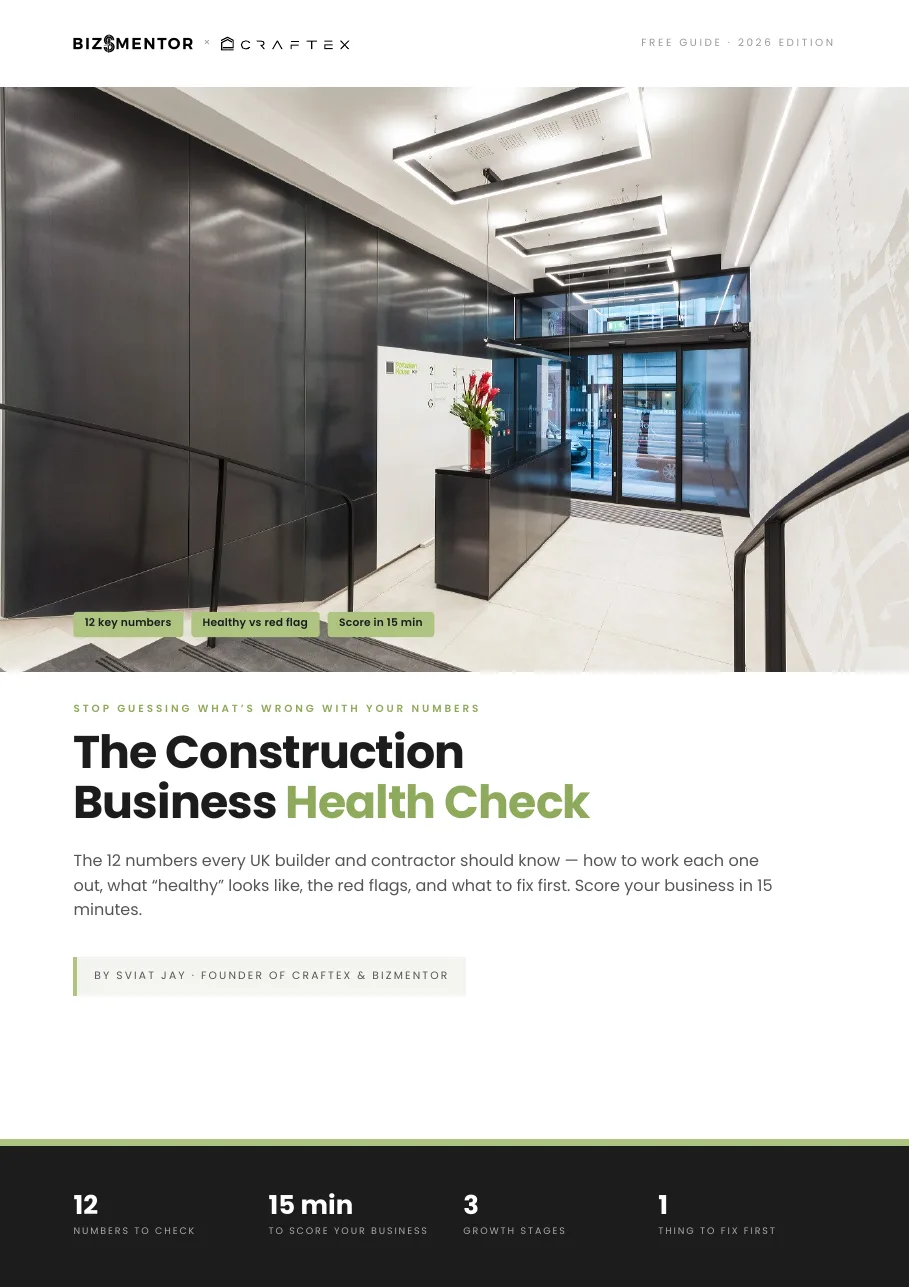
Get the free PDF guide
13 pages. Sent to your inbox in 2 minutes.
The short answer
The 12 KPIs every construction business should track:
- Turnover (rolling 12 months)
- Gross margin % — 25–35% on main-contractor work
- Net profit % — 10%+ after paying yourself
- Overheads as % of turnover
- Average job value
- Win rate on quotes presented
- Enquiries per month and lead sources
- Weeks of signed work ahead — 8+ is healthy
- Cash reserve in months of overheads
- Money owed to you and how overdue
- Marketing cost per won job
- Owner hours and where they go
The “healthy” ranges below are the rules of thumb we use at Craftex and with our clients — your trade and market may differ.
1–4. Turnover, gross margin, net profit and overheads
| KPI | How to work it out | Healthy | Red flag |
|---|---|---|---|
| Turnover | Sum of the last 12 months, updated monthly | Steady upward trend | “Slammed then dead” swings |
| Gross margin | (Price − direct costs) ÷ price | 25–35% | Under 20%, or actual below quoted |
| Net profit | (Gross profit − overheads) ÷ turnover | 10%+ after your salary | Under 5% |
| Overheads % | Yearly overheads ÷ turnover | Under ~15% | Growing faster than turnover |
If gross margin is low, nothing else can fix it. Price to a target margin rather than a markup, supply materials yourself and add your margin on every subcontract package. Swings in turnover are usually a pipeline problem — see numbers 7 and 8.
5–7. Average job value, win rate and lead sources
| KPI | How to work it out | Healthy | Red flag |
|---|---|---|---|
| Average job value | Turnover ÷ number of jobs | Growing year on year | Stuck on small jobs for years |
| Win rate | Jobs won ÷ quotes presented | ~1 in 3 on qualified leads | 1 in 8 or worse |
| Lead sources | Enquiries by source each month | 3+ sources bringing work | 90% word of mouth |
Average job value is the fastest lever for growth: bigger jobs mean fewer sales, quotes and site set-ups for the same turnover. Ghennadi grew his job size from £34K to £50K by pricing properly and presenting quotes live. A low win rate usually means the leak is in qualifying or presenting, not the price.
Score your business in 15 minutes
The free health check includes a scorecard, all 12 numbers and a summary page to pick your one fix.
8–11. Pipeline, cash reserve, debtors and marketing cost
| KPI | How to work it out | Healthy | Red flag |
|---|---|---|---|
| Weeks of signed work | Signed work not yet done ÷ average weekly turnover | 8+ weeks | Under 4 weeks |
| Cash reserve | (Bank − tax pot) ÷ monthly overheads | 2–3 months | Under 1 month |
| Money owed to you | Unpaid invoices by days overdue | Nothing over 14 days | Large amounts 30+ days |
| Marketing cost per won job | Marketing spend ÷ jobs won from it | Under ~20–25% of the job’s gross profit | Spending with no tracking |
Weeks of signed work is your early-warning signal: when it drops, you feel it in the bank six to eight weeks later. A simple rule for ads: on a £50K job with £15K profit you can spend £3–3.5K to win it.
12. Owner hours — and where they go
The business can only grow as far as your time. Split your week into tools, site, sales and admin. If most of 60+ hours goes on the tools or admin, audit your week, hire an admin first and then a site lead.
Which stage are you at?
- Operator — on the tools, pricing at night, numbers unknown. Focus: margin, cash reserve, first hire.
- Manager — off the tools, but every decision goes through you. Focus: win rate, job value, systems.
- Owner — the team runs jobs, you run sales and numbers. Focus: lead sources, pipeline, growth.
Track five numbers weekly (cash after tax, money owed, margin on live jobs, quotes presented and won, weeks of signed work) and all twelve every month. Pick one to fix in the next 90 days.
Get the full Health Check
12 numbers, healthy ranges, red flags and a 30-day plan. 13 pages, free.
Builders who fixed their numbers
Real clients, real numbers. Every story is on YouTube.
“When I first signed up with Sviat, my business was a mess and I was still on the tools. Now we've already hit £400k in revenue this year!”
Ghennadi Catansus · Trustpilot“After just a month and a half, I had earned back everything I'd invested and even made a profit on top.”
Sergey Dimov · TrustpilotIndividual results, not typical or guaranteed. Outcomes depend on your business, market and effort.
Frequently asked questions
What KPIs should a construction company track?
At minimum: turnover trend, gross margin, net profit, overheads %, average job value, win rate, lead sources, weeks of signed work, cash reserve, money owed, marketing cost per won job and owner hours.
What is a good gross margin for a builder?
On main-contractor work we aim for 25–35% gross margin. Below 20% there is rarely enough left to cover overheads and a profit.
How many weeks of work should a builder have booked?
Eight or more weeks of signed work is healthy. Under four weeks, make sales the priority straight away — the cash gap usually shows up six to eight weeks later.
How much cash reserve should a construction business keep?
Two to three months of overheads after setting aside VAT, CIS and tax. Build it before taking on a much bigger project.
How often should I review my construction business numbers?
Five numbers every week (a 30-minute Friday review) and all twelve every month, with a quarterly recheck against your targets.
Keep going
Get the full Construction Business Health Check
- Quick health score in 15 minutes
- All 12 numbers with healthy ranges and red flags
- Summary page, growth stages and a 30-day plan
From Sviat Jay, founder of Craftex (150+ projects across London) and BizMentor.
Send me the free guide
Free. No spam. Unsubscribe anytime.