Main Contractor Gone Into Administration and Owes You Money?

The short answer
Find the administrator, send a proof of debt, secure your unfixed materials and do no new work until someone confirms in writing who pays. Then call the client: they still need the job finished.
- Money owed before the administration is usually an unsecured debt. Expect pence in the pound, if anything.
- In the first 48 hours: confirm it, list what you're owed, stop new spend and secure your materials.
- Do no new work until someone confirms in writing who will pay for it.
- Call the client. They still need the job finished, and a direct contract is often your best recovery.
The call comes from your foreman. The site's locked and nobody at head office answers. By lunchtime it's on the trade news: the main contractor you've worked for all year has gone into administration. They owe you two applications and your retention.
You're not alone. Construction had 3,866 company insolvencies in England and Wales in the 12 months to August 2026, more than any other industry (Insolvency Service). When one contractor goes, hundreds of subbies and suppliers are left owed. Vidi Construction went into administration owing nearly £6m to 227 trade creditors.
This is your first-week plan: what to do today, how to claim, what to do about materials and how to stop it happening again. If you want help working out your exposure now, book a free strategy call. This is general information from a contractor's experience, not legal or insolvency advice.
What administration means for the money you're owed
Administration is an insolvency procedure. A licensed insolvency practitioner, the administrator, takes control of the company. Their job is to get the best result for all the creditors, not for you. They'll decide quickly whether to sell the business, finish some contracts or shut it down.
What that means for your money:
- Work done before the administration becomes a claim. You're normally an unsecured creditor.
- Unsecured creditors are paid last. Secured lenders, administration costs and preferential creditors come first. Preferential creditors include employees' wages up to a limit and HMRC for VAT, PAYE and CIS deductions. Often that leaves little or nothing.
- New work after the administration is a different deal. If the administrator asks you to carry on, agree in writing who pays and when, before you start.
Assuming the money's coming because the job is still running. Until someone confirms in writing that new work will be paid, every day on site is a bigger claim, not a smaller one.
The first 48 hours
Don't panic, and don't act on rumours. Do these six things in order:
- Confirm it. Check the company's Companies House page and The Gazette. Note the appointment date and the administrator's firm and contact details.
- Stop new spend on their jobs. Order no more materials and send no more labour until you know who's paying.
- List what you're owed. Every unpaid application and invoice, work done since your last application, retention held and materials on site.
- Secure your materials. Photograph and list unfixed materials on site and in your yard.
- Write to the administrator. Say you're a creditor, state what you're owed and ask for the claim details.
- Call the client. They need their building finished, and you may be part of how it gets finished.
Still not sure what to do about the money you're owed?
Book a free call with our team. We'll go through what you're owed, your claim and how to keep your cash moving.
Make your claim properly
The administrator writes to known creditors with a way to claim. If you hear nothing, contact them. You'll fill in a proof of debt: who you are, what you're owed, what it's for and any retention-of-title rights.
Send it with:
- Your subcontract and any agreed variations.
- Every unpaid application and payment notice, plus any pay less notices.
- Invoices and statements.
- Evidence of work since your last application: daily sheets, photos, delivery notes.
- The retention held, with the dates it was due back.
Debts of £1,000 or less may be treated as proved without a form. Send your figures and evidence anyway. Watch the deadlines in the administrator's letters: miss one and you can lose a dividend.
Then be realistic. The administrator's proposals usually arrive within 8 weeks and show what unsecured creditors can expect. Plan your cash as if this money isn't coming. Anything that does come is a bonus.
One contractor going bust shouldn't be able to sink you. The free 4-minute Construction Business Scorecard shows your weakest area, from pipeline and pricing to cash flow.
Materials, retention and stopping work
What you can still get back depends on where things are and what your contract says.
| Item | Usually | What to do |
|---|---|---|
| Unfixed materials, your retention-of-title clause, not paid for | May still be yours | Photograph, list, tell the administrator you claim them; don't just take them off site without agreement |
| Materials already built into the works | Belong to the building owner | Include their value in your claim |
| Materials in your yard, not delivered | Yours | Keep them; use them on other jobs |
| Plant and tools on site | Yours | Agree access with the administrator to collect them |
| Cash retention held by the contractor | Usually an unsecured debt | Put it in your claim; if your contract said it was held in trust, tell the administrator and take advice |
Can you stop work? Since 2020, a supplier usually can't end a contract or stop supplying just because the customer has gone into administration. A temporary Covid exemption for small suppliers has ended.
You keep your right to suspend for non-payment of sums that fall due after the administration. Under the Construction Act, that needs a 7-day written notice. In practice, many administrators stop the jobs themselves or ask subbies what it would take to carry on. Take legal advice on your contract before you serve a notice or walk off.
How suspension and adjudication work in normal times: main contractor not paying a subcontractor. Getting retention back from a contractor that's still trading: retention money not released.
Talk to the client: the job still needs finishing
The client still has a half-built project. That could be a developer, a housing association or a homeowner. You know the job better than anyone, and that's your strongest position.
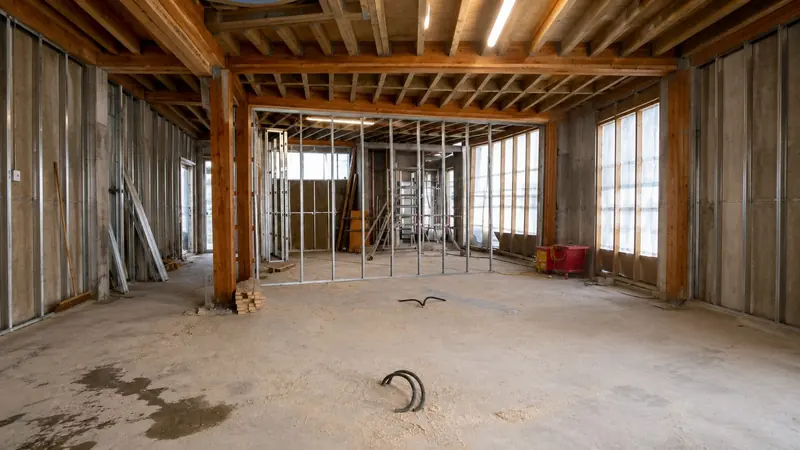
- Call the client's project manager, or the client. Tell them what you've done, what's left in your package and that you can carry on.
- Expect a new contract, with the client or the contractor they bring in. The client doesn't have to pay the old contractor's debt to you, so don't make the new deal depend on it.
- Price the remaining work fresh. Re-measure, allow for rework and agree terms that suit you: shorter payment intervals and less or no retention.
- Ask about a project bank account. Some public-sector jobs pay subbies direct, and that changes who owes you what.
The money lost on the old contract often never comes back. A new contract, priced properly, is how you recover it. If you want a second pair of eyes on that price, book a free strategy call.

The Cash Flow & Margin Blueprint
Payment terms, the UK rules that hit your cash, and a fill-in payment schedule.
Get the free guideMake sure it can't sink you next time
The subbies who get hurt most have one big customer and months of unpaid work. Set your own limits:
- Cap any one customer's share of your turnover. If one contractor gives you most of your work, read one client gives most of my work.
- Cap what any one customer can owe you. Over the cap, slow down or stop new work until you're paid.
- Check before you sign. Look for late accounts on Companies House, county court judgments and how they pay other subbies today.
- Watch the warning signs. Later payments, new pay less notices, staff leaving and suppliers on stop. The going bust warning signs apply to your customers too.
- Negotiate the terms. Shorter payment periods, retention cut or released at practical completion, and a retention-of-title clause for materials.
- Spread your work across main contractors, developers and direct clients. Then one collapse is a bad month, not the end. Ready to work direct? Read from subcontractor to main contractor.
Want a business where no single contractor can take you down?
Book a free strategy call.
Your first-week checklist
This is general information from a contractor's experience, not legal or insolvency advice. For your situation, speak to a solicitor or a licensed insolvency practitioner.
Before you go
- Administration confirmed; administrator's name and contact noted
- Everything owed listed with evidence; proof of debt sent
- Unfixed materials photographed, listed and claimed in writing
- No new work without written payment terms
- Client called; new contract priced fresh with better terms