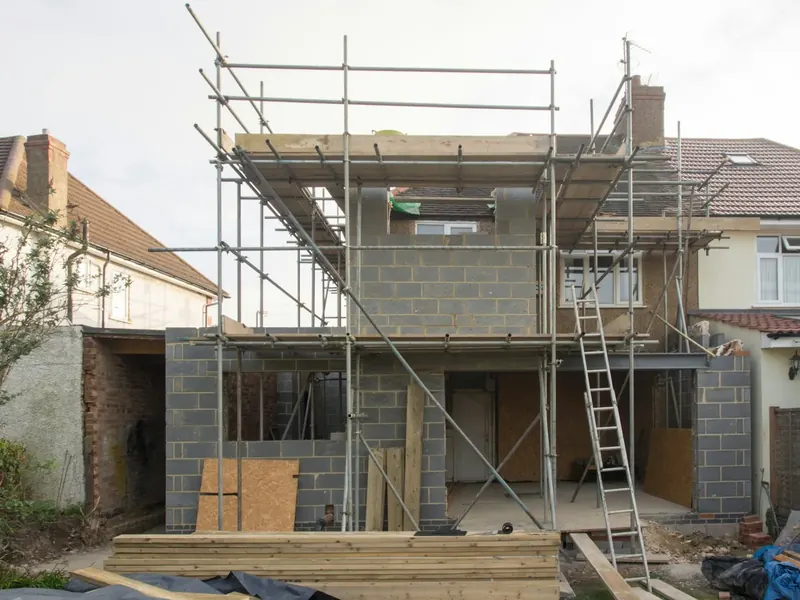
Construction Website Design: What Wins £50K+ Jobs

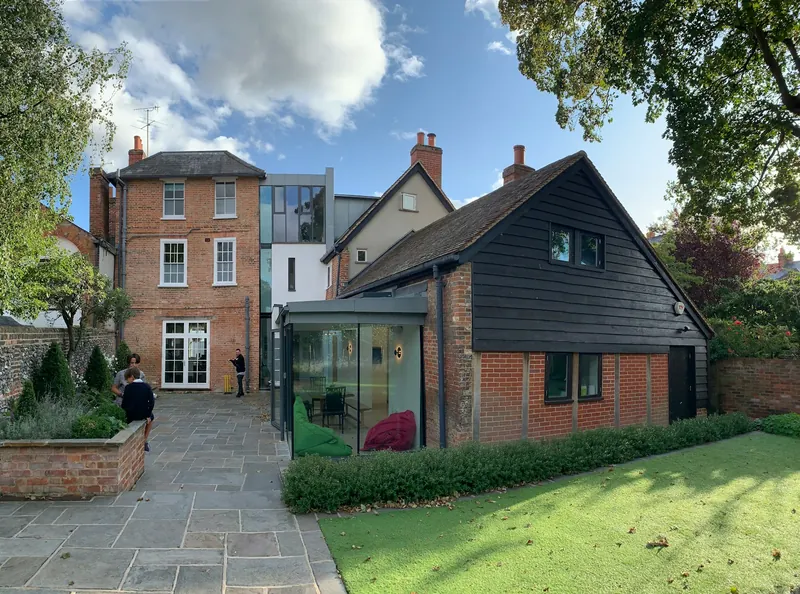
The short answer
A £50K+ client checks you before calling. Show similar projects, prove you are a real accredited company, load fast on a phone, and reply to every enquiry within minutes. Design comes after.
- It is checked on a phone. Ofcom: UK adults spend 4.5 hours a day online, mostly on a smartphone, and Google ranks the mobile version of your site.
- Project pages and trust details beat a gallery. Show work like theirs, plus company number, accreditations, insurance, reviews and a named person.
- Speed is measurable. Google's 'good' thresholds: main content in 2.5 seconds, response to taps in 200 ms, layout shift 0.1 or less.
- The enquiry is where most money is lost. A form with no CRM, no instant reply and no follow-up wastes every pound spent getting the visit.
Nobody signs a £50K extension or a £200K fit-out from a website. But plenty of people decide not to call because of one.
A client spending that kind of money is comparing three or four builders. They look at your site to answer three questions. Have you done work like mine? Are you a real and safe company? Will you answer?
Good construction website design answers all three in the first minute and gets the call. A pretty site that does not, does not. If you are not sure yours passes, book a free strategy call and we'll look at it with you.
Built for the phone first
Ofcom's latest figures: UK adults spend an average of 4.5 hours a day online, and most of that time is on a smartphone. On our own site, around nine in ten visitors arrive on a phone.
Google works the same way: it uses the mobile version of your site for indexing and ranking. If your phone version hides project details or squeezes them out, Google sees less of your business too.
What "mobile first" means in practice:
- Phone and WhatsApp in one tap, visible without scrolling.
- Short pages with big photos, not walls of text.
- A form with three to five fields, not fifteen.
- The same content as desktop, grouped into sections rather than cut.
Is the gap in your pipeline or in how you convert enquiries? Take the free 4-minute Construction Business Scorecard. It asks 18 questions on your pipeline, sales, pricing, cash flow and systems, and shows your weakest area first.

The 8 things a £50K+ client looks for
- Projects like theirs. A page per project: type of work, scope, area, duration, and photos of your own job before, during and after.
- The services and areas you cover. One clear page per main service and area, so the right people find you on Google.
- Proof from other clients. Reviews with names, and case studies that say what the client wanted and what you delivered. The same proof goes on your one-page capability statement.
- Accreditations and insurance. CHAS, SafeContractor, trade bodies, warranty schemes: whatever you genuinely hold, with logos.
- A real company. Company name, number, registered office, and the people who run it, with photos.
- How you work. Survey, quote, contract, programme, payments, handover: a short process removes the fear of the unknown.
- A clear next step. One action on every page: request a quote, book a survey, or call.
- Speed. Pages that open fast on a mid-range phone on 4G.
Filling project pages with stock photos or other people's work. A client who spots it once stops trusting everything else on the site, and it can mislead them. Use your own job photos, even if they were taken on a phone.
The legal details you must show
If you trade as a limited company, GOV.UK says your website must show:
| Detail | Example |
|---|---|
| Registered company number | Company no. 01234567 |
| Registered office address | The address on Companies House |
| Where the company is registered | England and Wales, Scotland or Northern Ireland |
| That it is a limited company | Full name including "Limited" or "Ltd" |
If you choose to name directors, name all of them. Put these in the footer of every page. Bigger clients and their quantity surveyors do check Companies House, and a website that matches the register is one less reason to doubt you.
Speed: the numbers Google uses
Google's Core Web Vitals set three "good" thresholds, measured on 75% of real visits on mobile and desktop:
| Measure | What it means | Good |
|---|---|---|
| Largest Contentful Paint | How fast the main photo or heading appears | 2.5 seconds or less |
| Interaction to Next Paint | How fast the page reacts to a tap | 200 milliseconds or less |
| Cumulative Layout Shift | How much the page jumps while loading | 0.1 or less |
The usual causes of a slow builder's site are huge uncompressed project photos, sliders, and plug-ins nobody uses. Compress photos, serve smaller versions to phones, and remove what does not help a client decide.
Not sure your website is costing you jobs?
On a free call we look at your site, your Google presence and how you follow up enquiries, and tell you what to fix first.
Where the money is really lost: after the enquiry
Most builders judge a website on how it looks. Judge it on what happens after someone fills in the form.
- Every enquiry goes into one CRM pipeline, not a personal inbox.
- An instant reply confirms you received it and says what happens next.
- Reminders and follow-ups run until the client books a survey or says no.
- Tracking to the signed job Enquiries, site visits, quotes, signed work, by source.
Without this, you pay to get the visit and lose the client to whoever answered first.
Google Business Profile and AI search
Your website and your Google Business Profile work as a pair. Two rules from Google's guidelines that trip builders up:
- Working at clients' sites? Hide your address and set a service area. Google says it should not extend beyond about two hours' drive from where you are based.
- Use your real business name. Adding services or towns to the name ("Smith Builders Extensions London") is not allowed and can get the profile suspended.
Search is changing too: Ofcom reports AI overviews appear on roughly three in ten searches. Clear pages that answer clients' questions in plain words, with real project details, are what those summaries can quote.
Construction website design: DIY, generic agency or contractor-run
| Option | Best when | Who owns it | Watch out for |
|---|---|---|---|
| DIY website builder | You need a simple site now and have time to keep it updated | You | Slow pages, no CRM, no follow-up, no tracking |
| Generic web agency | You want a professional design and will manage leads yourself | Check the contract | Construction proof left thin; enquiries not tracked to signed jobs |
| BizMentor (contractor-run) | You want the website, CRM, follow-up and reporting built as one system | You: everything set up in your name, handed over | Ad spend paid by you on top; fees fixed and agreed in writing |
Budgeting for the site and ads? Work it back from your profit per job. See how much a builder should spend on marketing, then put the website into a 12-month construction company marketing plan.
Craftex, our London design and build company, wins its clients with the same website, CRM and follow-up we set up for clients. That is our marketing and lead generation service. A website plus the Craftex CRM is built for you inside the Construction Business Accelerator and Main Contractor Accelerator programs.
Martin, a BizMentor client, went from £300–600K to £1.5M a year and £600K+ contracts after rebranding. Individual results, not typical or guaranteed.
Want enquiries for the projects you actually want? Book a free strategy call. We look at your website, your area and the jobs you want more of.
Before you redesign your website
- Write one page per project with type, scope, area and duration
- Put phone and WhatsApp in one tap on mobile
- Add company number, registered office and accreditations to the footer
- Test the main page against Google's three speed thresholds
- Connect the enquiry form to a CRM with an instant reply