How to Write a Construction Capability Statement

The short answer
A capability statement is a one- or two-page summary that shows a buyer in 30 seconds what you build, at what size, and why to trust you. Lead with work type and size, show three projects, end with one named contact.
- It's a door-opener, not a brochure. One or two pages that get you invited to price.
- Lead with what and how big. Work type, sectors, area and typical project value first, then three relevant projects with values.
- Show the boxes they tick. Accreditations, insurance levels, health and safety and CIS status.
- One version per audience, numbers not adjectives. "£80K–£400K refurbishments, 12 people" beats "quality-focused, reliable team".
An estimator gets dozens of emails a week from firms wanting work. Most are a paragraph of "we are a reliable, quality-focused company" and a 20-page brochure nobody opens.
A good construction capability statement is the opposite: one page, read in 30 seconds. It answers the only question the reader has. Can this firm do our kind of job, at our size, without letting us down?
This guide gives you the structure, an example and a version for each audience. If you want us to look at how you present your company, book a free strategy call.
What a capability statement is, and isn't
| Capability statement | Company brochure | Tender pack | |
|---|---|---|---|
| Length | 1–2 pages | 10–30 pages | Whatever the tender asks |
| Purpose | Get invited to price | Tell your full story | Win a specific job |
| Reader | Estimator, architect, buyer, on first contact | Client already interested | Evaluators scoring your bid |
| Tone | Facts and numbers | Story and photos | Answers to set questions |
Send it after a first phone call, attach it to supplier registrations, leave it after a site visit, link it from your website. It's the document that gets you to the next step.
The one-page structure that works
Work top to bottom in this order. Each block is a few lines.
- One line on what you do: what you build, for whom, where. "Commercial and high-end residential fit-out contractor, London and the South East."
- Services and sectors: the packages or project types you deliver, and the sectors you know.
- Size and capacity: typical project values, team size, how many projects you run at once.
- Three relevant projects: for each, the type, value, programme, client type and one strong photo.
- Accreditations and compliance: schemes held, insurance levels, health and safety record, CIS status.
- Key people: two or three names with one line each, including who the reader will deal with.
- Why us: two or three specific, provable reasons. Numbers, not adjectives.
- One contact: a named person, a direct mobile and an email. Not info@.
Want a second pair of eyes on how you present your company?
Book a free call and send us what you have.
An example, section by section
Here's how the top half of a statement might read for a fictional fit-out company. Every figure is illustrative.
Example Interiors Ltd: commercial and high-end residential fit-out, London and the South East
What we deliver: drylining, partitions, ceilings, joinery and full Cat B fit-out packages, as a subcontractor or main contractor.
Typical size: packages of £50K–£400K. Team of 14 plus regular subcontractors. Up to four live projects at once.
Recent projects: office Cat B fit-out, 900 m², £310K, 10 weeks, occupied building. Restaurant fit-out, £140K, 7 weeks, night working. Residential refurbishment with bespoke joinery, £220K, 16 weeks, architect-led.
Compliance: CHAS (Common Assessment Standard), public liability and employer's liability insurance, CIS gross payment status, CSCS-carded operatives.
Notice what's missing: no "passionate", no "second to none", no mission statement. Every line is something the reader can check.
Make one version per audience
Keep one master document and adapt it. Each reader is looking for something different.
| Audience | What they look for first | Put up front |
|---|---|---|
| Main contractors | Packages, capacity, compliance, price speed | Packages and values, team size, accreditations, "prices back in 48 hours" if true |
| Architects and interior designers | Finish quality, design understanding, reliability | Photos of finished work, design-led projects, a reference from a designer |
| Developers | Programme, cost certainty, repeat delivery | Projects delivered on programme, cost control, design and build ability |
| Public buyers and frameworks | Accreditations, similar public work, policies | Schemes held, public or occupied-building projects, social value |
If you're approaching main contractors, pair it with how to get onto their approved supplier lists. For architects, see how to get work from architects.
Mistakes that get it ignored
| Mistake | Why it fails | Fix |
|---|---|---|
| Ten pages long | Nobody reads past page one | One page, two at most |
| Adjectives instead of facts | Every competitor says "quality" | Values, programmes, team size, schemes held |
| Projects that don't match the reader | A fit-out QS doesn't care about loft conversions | Pick three projects like theirs |
| Logos of firms you never worked for directly | Gets checked, and kills trust | Only list clients you can name a reference for |
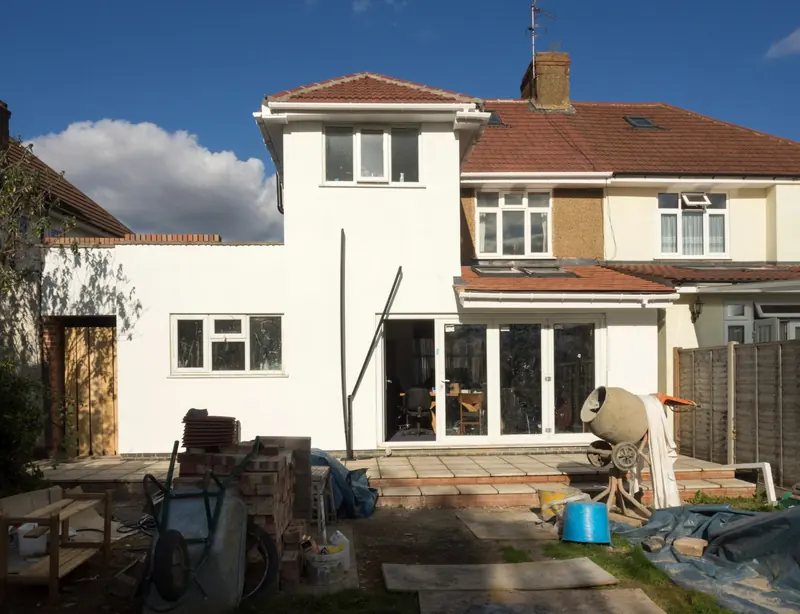
| Phone photos of half-finished work | Looks small and amateur | Daylight photos of finished rooms |
| No named contact | The reader doesn't know who to call | A name and a direct mobile |
Craftex, Sviat's London design and build company, holds CHAS, SafeContractor and ISO 9001, 14001 and 45001 and tenders for its own work every month. But schemes only matter when the reader asks for them. Don't buy accreditations just to fill a line on a page. For what buyers actually check, see our selection questionnaire guide.
Construction Company Marketing Guide
Positioning worksheet, image checklist, channels and real costs per lead for UK contractors.
Get the free guideBeyond the document
A capability statement opens doors. What happens after the first call, the price, the presentation and the follow-up, decides whether you win. Our construction marketing and lead generation service builds the website, proof and enquiry system around it, and our bid writing service takes it into tenders.
BizMentor is one-to-one mentoring with Sviat, who runs Craftex today. He works on your positioning, proof and sales with you. BizMentor mentoring aims for results in about 4 months rather than 1–3-year programs. See where your business stands with the free 4-minute Construction Business Scorecard.
Want contractors and architects to call you back? Book a free strategy call.
This is general information from a contractor's experience. For the bigger marketing picture, read the free construction marketing guide.
Before you send your capability statement
- One page, with what you build, for whom and at what size in the first lines
- Three projects that match this reader, with values and photos
- Accreditations, insurance and CIS status listed accurately
- No adjective you couldn't prove with a number
- A named contact and a direct mobile at the bottom