Hiring Your First Employee in a Construction Company: The UK Guide


The short answer
Hire the person who takes work off you, usually admin or a site lead, not another labourer. Check you can afford the true cost, register as an employer for PAYE, get employers' liability insurance, check right to work, set up a workplace pension and give a written statement of terms from day one.
- Hire for the hours you want back, not the hours you're short on site. First hire is usually admin or a site lead.
- The true cost is about 1.5× the wage per chargeable hour. An £18-an-hour worker costs about £27.40.
- Legal must-dos: PAYE before first payday, employers' liability insurance (at least £5 million), right-to-work check, pension, written terms from day one.
- Plan the first 30 days: role card, checklists, one task handed over per week.
Hiring your first employee is the biggest step a construction company or trade business takes. Done right, it gives you back hours every week and lets you take bigger jobs. Done wrong, it adds a wage bill, more questions and a person you have no time to train.
This guide covers who to hire first, what it really costs and the legal steps in the UK. Then a 30-day plan, so the hire pays for itself. Not sure who your first hire should be? Book a free strategy call.
Who to hire first
Builders usually hire another labourer when they are busy. That adds hours to your week: more people to organise, more questions, the same you on every job. Hire the person who takes work off you instead.
- Admin or virtual assistant. Calls, bookings, invoices, chasing payments, CIS paperwork. Often the fastest win.
- Site lead or foreman. Runs a job day to day, so you are not needed on site.
- Estimator. Prices from your rates library; you check the big ones.
- Project manager. Runs several jobs, clients and subbies.
- Sales. Follow-ups and relationships. Commission-based works well to start. Adam took on a commission-based salesperson and a freelance referrer paid per new client. He only paid when work came in. See how to hire a salesperson for pay, tests and the first 90 days.
To find out which one you need, write down what you do for two weeks in 30-minute blocks. Mark each task A (only you), B (someone could, with training) or C (anyone could, today). The C list is your first hire.
More on this in how to get off the tools. Getting no replies to your adverts? See what to do when you can't find workers.
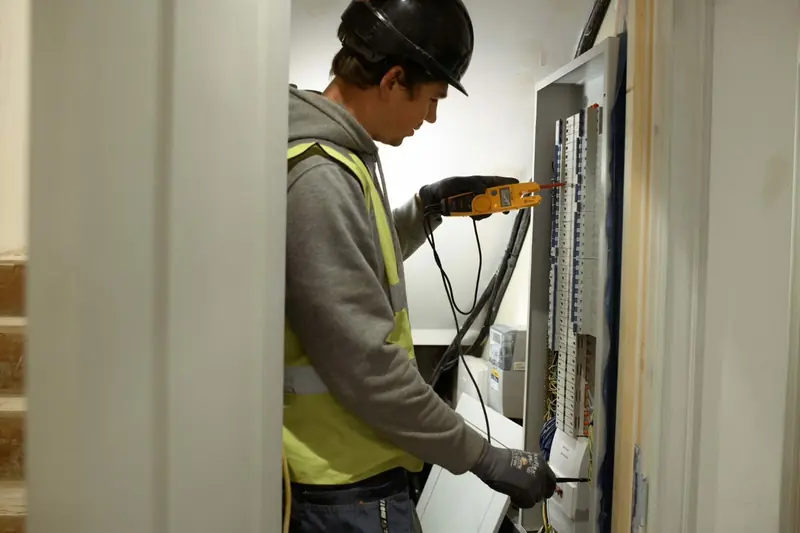
Hire for the hours you want back, not the hours you're short on site.
Employee or subcontractor: decide first
Before anything else, decide whether this person is really an employee. Someone who works regular hours only for you, under your direction, with your tools, is very likely an employee, whatever you call them. If you only need a trade for part of a job, a subcontractor may be right. The full test is in employ or subcontract labour.
What it really costs
An employee costs about one and a half times their hourly wage per chargeable hour. On 2026/27 rules:
| Item | £ a year |
|---|---|
| Wages: £18 × 40 hours × 52 weeks | 37,440 |
| Employer NI (15% above £5,000) | 4,866 |
| Pension (3%) | 936 |
| Total cost | 43,242 |
| Chargeable hours after 5.6 weeks' holiday and lost time | about 1,578 |
| True cost per chargeable hour | about £27.40 |
Two things can bring this down. Employment Allowance can cut your employer NI bill by up to £10,500 a year if you are eligible. A company whose only employee paid above the NI threshold is a director usually cannot claim. And an admin hire is often part-time.
The test: will the hours this person frees up, or the work they deliver, bring in more gross profit than they cost? If your prices only work because you do the labour for free, fix your prices first.
Not sure your margins can carry a hire?
Book a free call and we'll run the numbers with you.
The legal steps in the UK
Following gov.uk's order for employing someone for the first time:
| Step | What to do |
|---|---|
| Pay at least the minimum | National Living Wage is £12.71 an hour for workers 21 and over from 1 April 2026 |
| Right to work | Check documents before they start and keep a copy |
| Register as an employer | Set up PAYE with HMRC before the first payday |
| Employers' liability insurance | Compulsory from day one, at least £5 million cover |
| Workplace pension | Auto-enrol eligible staff (aged 22+ earning over £10,000 a year) |
| Written statement of terms | Give it on or before their first day |
| Health and safety | Risk assessments, training and PPE for the work they do |
This is general information as of October 2026. Your accountant can set up payroll in an afternoon.
Your first 30 days with them
Most first hires fail because nobody trained them. Plan it:
- Before day one: a one-page role card. What they own, what they can decide alone, what "good" looks like.
- Week 1: the checklists. Write a one-page checklist or record a 5-minute phone video for the three tasks you hand over first.
- Weeks 2–4: one task handed over per week. They do it, you check it, the checklist improves.
- Every week: 15 minutes together. What went well, what got stuck, what is next.
When someone asks you "how do I…?", send the checklist, and improve it if it did not answer the question.
From 1 January 2027, most employees can claim unfair dismissal after 6 months, not 2 years. Review a new hire at month 1, 3 and 5. If it isn't working out, see how to dismiss an employee with under 2 years' service.

What happens when owners hire right
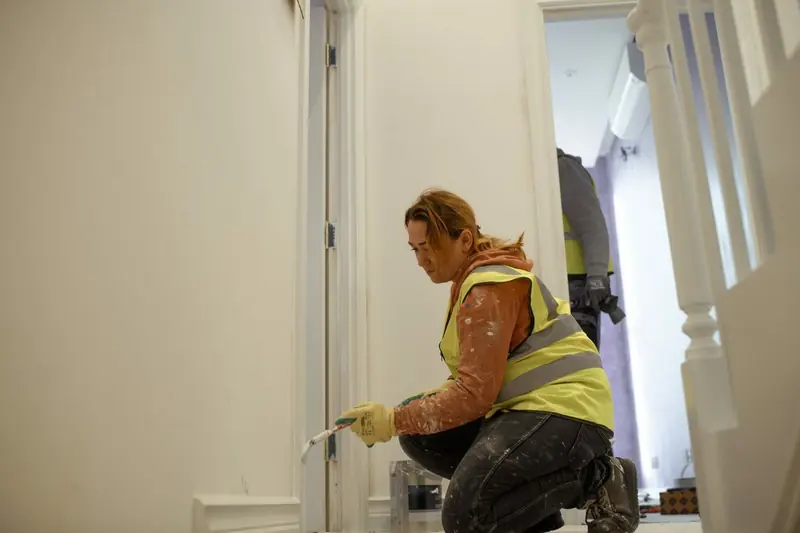
Hiring in the right order is how small firms grow quickly. Oleg, a 19-year-old taper and jointer, built a team of 10+ people within two months of starting his company. Dima, an electrician, hired about ten people in about four weeks and earned around £7–8K a month. Individual results, not typical or guaranteed.
Oleg: from £100 a day on site to a team of 10+
£7K a month profit from his own company in 2 months. Individual results, not typical or guaranteed.
Getting help with your first hires
Every owner needs a different first hire. One is great on site and drowning in admin; another can sell but cannot let go of the tools.
Sviat Jay runs Craftex, a London design and build company, and mentors owners one-to-one himself. He builds the team around your strengths. The flagship is one-to-one, by application; smaller firms start in small groups (max 10–20) with regular one-to-ones. Built for results in about 4 months, not 1–3 years.
Take the 4-minute Construction Business Scorecard to see where your time goes first. Or book a free strategy call and we'll pick your first hire with you.
Ready to hire the person who frees you up?
Book your business assessment.
Before you hire
Employment and tax points are general information as of October 2026. Check the details with your accountant.
First employee: checklist
- Track two weeks of your time and mark tasks A, B or C
- Cost the role at the true hourly rate, not the wage
- Register for PAYE and arrange employers' liability insurance
- Write a one-page role card and three checklists
- Block 15 minutes a week to review with your new hire