First Big Job and Scared to Price It? Do This

The short answer
Price a big job as a set of smaller packages, not one guess. Measure every package, price prelims for the full programme, add a priced allowance for each named risk, and agree a payment schedule that pays for each stage before you fund it.
- Break it down. A £60K job is ten £6K packages you already know how to price.
- Prelims grow with time, not size. Skip, scaffold, welfare, supervision: price them for every week on site.
- Price the risks you can name. One line per risk, with a figure, beats a blanket percentage.
- The payment schedule is part of the price. If the job needs your cash to run, you are lending the client money.
Your usual job is a £15K bathroom or kitchen. Then someone asks you to price a £60K extension. It is the job you have been waiting for, and you are scared stiff of it. Price too high and you lose it. Price too low and one job takes a year's profit with it.
This guide shows how to price a job three times bigger than usual without guessing. It is for UK builders and trades moving from £5–20K jobs to £50K and above. Want someone to check your number before you send it? Book a free strategy call.
Why a job 3× bigger is a different job
The fear is right, but for the wrong reason. A bigger job does not need different maths. It has different risks.
On a £15K job, a missed item costs you a few hundred pounds. On a £60K job running 12 weeks, three things grow faster than the price:
- Time on site. Scaffold, skip hire, welfare and your own supervision run every week.
- Cash out before cash in. Materials and labour leave your account long before the client pays.
- Unknowns. Ground, old structure, client changes and long-lead items you have never ordered before.
Price those three properly and the rest is the same work you already do.
Break the job into packages you know
A £60K job is not one number. It is ten £6K packages, and you already know how to price most of them.
Split the drawings into packages: demolition and strip-out, groundworks, structure, roof, windows and doors, first fix, plastering, second fix, kitchen or bathroom, decorating. Then for each one:
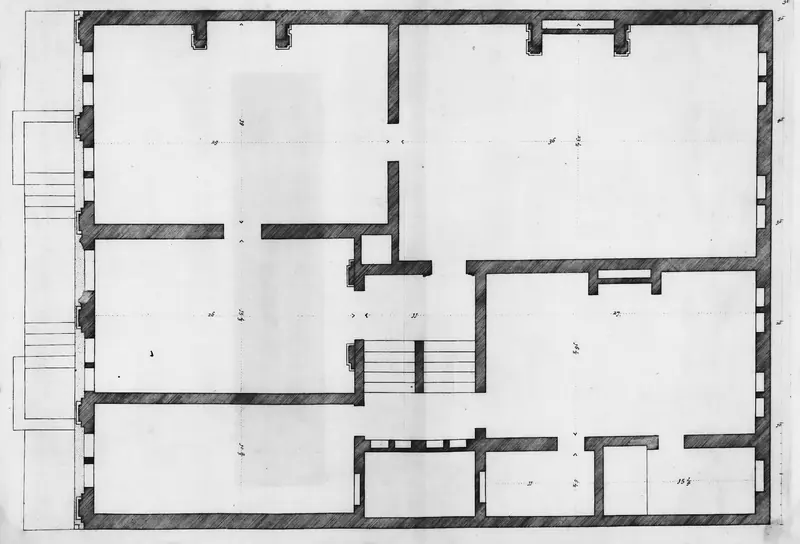
- measure quantities from the drawings, not by eye
- price labour by days or by measured rate you trust
- price materials from a current merchant quote
- write what is excluded next to what is included
Packages you have never priced (steel, a flat roof, underfloor heating) get a written quote from a subcontractor before you price your own number. For a full method, see how to price building work.
Price prelims for the whole programme
Prelims are the costs of running the site rather than building anything. On small jobs builders often absorb them. On a big job they can be a serious slice of the price.
Write a simple programme first: how many weeks, in what order. Then price every weekly cost for every week:
| Prelim item | Example basis | Why it bites on big jobs |
|---|---|---|
| Scaffold | Hire per week, plus erect and strike | 12 weeks is not 3 weeks |
| Skips and waste | Number of skips over the job | Strip-out fills more than you think |
| Welfare and toilet | Hire per week | Needed when the client's facilities are not available |
| Your supervision | Your days on site per week | Your time is a cost, not a free extra |
| Protection and cleaning | Per week and a final clean | Clients notice the mess on long jobs |
| Insurance, parking, permits | As quoted for this job | Easy to forget, hard to recover |
If the programme slips, prelims keep running. That is why the programme comes before the price.
The Builder's Pricing Playbook
Package pricing, prelims, overheads and margin, with £ examples and the estimate summary sheet. 13 pages, free.
Get the free guidePrice the risks you can name
A blanket "add 10% just in case" either loses you the job or does not cover the real risk. Instead, write a line for each risk and decide who carries it:
| Risk | Example | How to handle it |
|---|---|---|
| Ground and foundations | Depth unknown until you dig | Price to a stated depth; deeper is a variation |
| Existing structure | Rotten joists, old wiring | Allowance in the price, or a provisional sum |
| Client choices | Kitchen, tiles, sanitaryware not chosen | Prime cost sum with a stated figure |
| Long-lead items | Steel, windows, bespoke joinery | Client pays for the order upfront |
| Programme | Weather, planning conditions | Stated start date and weeks; delays priced |
Put the exclusions and assumptions in the quote in plain English. A client who reads "price based on foundations to 1 metre" cannot be surprised later. Every change after that goes through a written variation.

Knocking money off at the end to "make sure you get it". If you need to cut, cut scope, not margin. A £60K job priced at £54K to win it can lose you more than the whole margin.
Build a payment schedule that funds the job
On a big job, the payment schedule is as important as the price. If you pay for six weeks of labour and materials before the first stage payment, you are lending the client money.
Work out your cash week by week: what goes out, what comes in. Then set the stages so the client's money lands before each stage starts:
| Example stage | Client pays | Before you start |
|---|---|---|
| Deposit on signing | Agreed deposit | Order long-lead items, book trades |
| Foundations and slab | Stage payment | Groundworks and concrete |
| Wind and watertight | Stage payment | Roof, windows, external doors |
| First fix and plastering | Stage payment | Internal trades |
| Practical completion | Final payment, kept small | Snagging and handover |
Keep the last payment small. The last invoice is the one clients argue about. See how much deposit a builder should take for the rules on deposits.
Not sure your payment schedule covers your cash?
Book a free strategy call and we'll check it with you.
Get a second pair of eyes before you send it
Before the quote goes out, have someone check it who did not price it. Look for missing packages, prelims for the wrong number of weeks, and margin cut to nothing.
Get a professional to check your price when:
- The job is 3× your usual. One mistake costs more than a year of small jobs.
- It comes with a full specification. Drawings, specs and contract terms you have not priced before.
- A 10% error wipes out your profit. Then the check is cheap insurance.
BizMentor's construction estimating service prices jobs from your drawings, like a contractor. Then present the price in person or on a call, not by email, so you can answer questions there and then.
For a four-minute score of your pricing, profit, cash and systems, take the free Construction Business Scorecard.

What stepping up looks like in practice
Adam and Ali were stuck at about £500K a year. They went on to win a £528K project, and in 8 days signed £91,796 of work, including a £49K extension.
Dmitriy, a plumber with 20 years on the tools, won his first £50K commercial project. He now presents quotes live and follows up every week. Individual results, not typical or guaranteed.
Sviat Jay runs Craftex, a London design and build company that prices and delivers big projects. He mentors owners one to one himself. Some owners are strong on site but weak on numbers; others can price but cannot sell the price. He works on your weak spot first.
He aims for results in about 4 months, not the 1–3 years many coaching programs take. Moving into commercial work too? Read how to price a commercial construction job. To price your next big job with us, book a free strategy call.
About to send your biggest quote yet?
Book a free strategy call first.
Before you send your first big quote
- Every package is measured and priced from the drawings
- Prelims are priced for every week of the programme
- Each named risk has a line, a figure or a clear exclusion
- The payment schedule pays for each stage before it starts
- Someone who did not price it has checked it