Landscaping Business Profit Margins in the UK

The short answer
Landscapers lose margin on what goes into the ground and out of the garden: excavation, sub-base, muck-away and wasted slabs. Price every hard landscaping job from those quantities, then use maintenance contracts and booked-ahead deposits to fix the winter cash gap.
- Price from quantities, not per m² from a competitor. Our 40 m² patio example costs £5,590 and prices at £7,986 at a 30% floor, about £200 per m².
- Muck-away and waste class move the price. From April 2026 landfill tax is £8.65 a tonne for inert waste and £130.75 for the standard rate.
- Some jobs need permission. Paving more than 5 m² of a front garden with an impermeable surface needs planning permission in England, and a new dropped kerb needs the council's approval.
- Winter is a cash problem, not a work problem. Maintenance contracts on monthly payments and deposits for spring bookings keep the business paid all year.
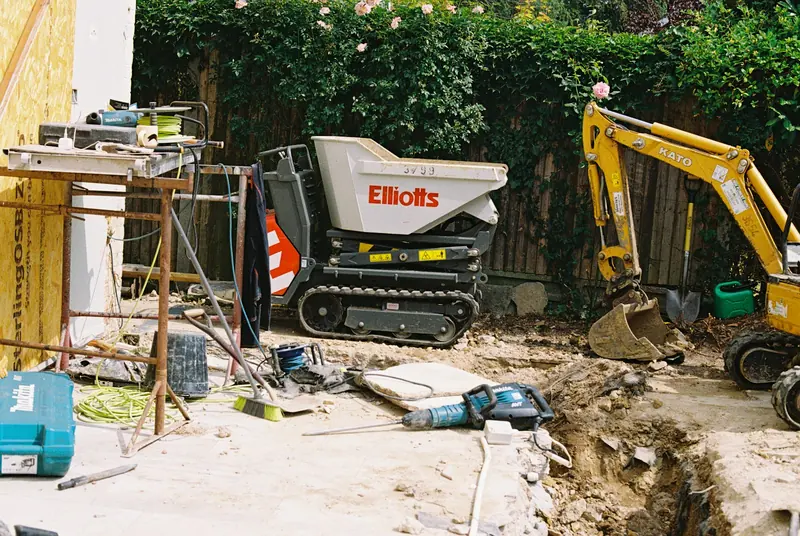
Landscaping is a trade where the work is visible and the costs are buried. The client sees a beautiful patio. You know about the 12 tonnes of soil that went out and the sub-base that went in. You also know about the slabs you cut and wasted at the edges.
This guide is for owners of UK landscaping businesses, from two-person teams to firms with several crews. It shows how to price so the hidden work is paid for, and how to stop winter eating your summer profit. If your profit margin feels too thin, book a free strategy call.
Where landscaping businesses lose profit margin
Most landscaping jobs go wrong in the same places:
- Excavation and muck-away priced by guess, then the ground is deeper or dirtier than expected
- Sub-base and bedding cut back to win the job, then the patio moves
- Slab waste at cuts and edges never allowed for
- Plant hire running on while the team waits for deliveries or weather
- Weather days given away free on a fixed price
- Winter Three slow months that eat the cash from six busy ones
Price hard landscaping from quantities
Worked example: 40 m² porcelain patio, rear garden (example figures)
| Line | Basis | £ |
|---|---|---|
| Labour | 2 landscapers × 5 days = 10 man-days × £200 | 2,000 |
| Mini digger | 2 days, delivered | 300 |
| Muck-away | 2 grab-lorry loads × £300, inert soil | 600 |
| Sub-base and bedding | Type 1, sand, cement | 800 |
| Porcelain slabs | 44 m² (40 m² + 10% for cuts) × £35 | 1,540 |
| Primer, jointing, edging | 350 | |
| Direct cost | 5,590 | |
| Price at a 30% floor (÷ 0.70) | 7,986 |
That is about £200 per m². Work backwards from a competitor's "£120 per m²" and you would have no money for the muck-away, the sub-base or the cuts.
Your margin floor is your overheads as a % of turnover (vans, trailers, insurance, tools, yard, your salary) plus the net profit you want.
Price the waste and the weather
Muck-away. Your waste firm's price includes landfill tax. From 1 April 2026 the rate depends on what the waste is. Qualifying inert material such as clean soil is £8.65 a tonne. The standard rate is £130.75 a tonne.
Old concrete mixed with roots, timber and plastic is not clean soil. Find out before you price. (More on this in how to price groundworks jobs.)
Green waste and carrying. If you carry clients' waste in your own vehicle, you need to be registered as a waste carrier. Price green-waste removal as its own line.
Weather. Put a weather clause in the quote: days lost to rain or frost move the finish date, and the programme says so. Do not give away three wet days on a fixed price.
Quoting "remove and dispose of all spoil" as one line. When the old patio turns out to have a concrete base and buried rubble, the extra loads are yours. Price per load, for the waste you expect.
Want your patio, driveway and planting rates built from your own numbers?
Book a free strategy call.
Know which jobs need permission
Two kinds of job can need approval before you start, in England:
- Front gardens: paving more than 5 m² with an impermeable surface that drains onto the road needs planning permission. Permeable paving, or running the water to a lawn or border, usually does not.
- Dropped kerbs: a new vehicle crossing over the pavement needs the council's permission, and often their approved contractor.
- Spraying: using weedkillers professionally needs a certificate of competence (usually the PA1 and PA6 units).
Check these at survey stage and put them in the quote. Then turn them into a selling point. A client who hears you explain permeable paving trusts you over the cheaper quote.

The Cash Flow & Margin Blueprint
How to plan cash across the year so a quiet winter never puts the business at risk.
Get the free guideFix winter with recurring work
Landscaping cash is seasonal. Work peaks in spring and summer, and many firms spend autumn and winter living off the summer. The fix is planned income, not more quotes.
Maintenance contracts. Price each visit from time on site plus travel, then sell an annual contract paid monthly.
| Maintenance line (example) | £ |
|---|---|
| Visit: 2 people × 2 hours + travel, true cost | 95 |
| Price per visit at a 30% floor | 136 |
| 24 visits a year, paid monthly (12 × £272) | 3,264 a year |
Ten contracts like that is over £32,000 a year arriving every month, winter included.
Book spring in winter. Design visits and quotes in January and February, with a deposit to secure a spring start date; see how much deposit should a builder take.
Track hard, soft and maintenance separately
Split your turnover into three lines and job-cost each:
| Line | Where the money is | What to watch |
|---|---|---|
| Hard landscaping | Patios, driveways, walls | Excavation, waste, slab cuts |
| Soft landscaping | Planting, turf, design | Plant losses, aftercare |
| Maintenance | Recurring visits | Travel time, visits overrunning |
Compare quoted with actual on every job: man-days, plant days, loads, materials. After a season, you will know which line to grow.
For a four-minute score of your pricing, cash, sales and systems, take the free Construction Business Scorecard.
Grow from a crew to a landscaping company
The landscapers who grow do three things. They price from quantities and sell on design and quality, not the cheapest m² rate. And they build recurring income so cash never stops. Commercial clients (managing agents, housing developers, schools) come next, once your paperwork and case studies are ready.
Most owners we mentor fix pricing and sales first. Seghei went from about £4–5K a month to £39K in two months. Individual results, not typical or guaranteed.
Sviat Jay runs a working construction company, Craftex, and mentors owners one to one himself. Every owner is different. He builds on what you are already good at, aiming for results in about four months rather than 1–3-year programs. To plan your next step with our team, book a free strategy call.
If you need more of the right enquiries, see our construction marketing and lead generation.
Want to know which of your landscaping jobs really make money?
Book a free strategy call.
Before you send your next landscaping quote
Regulatory and tax points are general information for England as of October 2026. Check details with your local planning authority and accountant.
Before you go
- Excavation, sub-base, slabs plus cuts and edging are measured
- Muck-away is priced per load for a stated waste class
- Planning, dropped kerb and spraying rules are checked
- A weather clause is in the quote
- Maintenance and spring bookings are planned for winter cash