How to Price Groundworks Jobs in the UK

The short answer
Price groundworks from quantities and your own outputs: dig, cart away, concrete, plant and labour as separate lines, then add the ground risk as exclusions and provisional sums. Muck-away classification alone can move a job by thousands.
- Price from quantities, not a day rate guess. Volume dug, loads carted, concrete poured, plant days, man-days. Then divide by (1 − your margin floor).
- Waste class decides your margin. From 1 April 2026 landfill tax is £8.65 a tonne for inert waste and £130.75 for standard-rated waste. 25 tonnes in the wrong class is about £3,050 of tax alone.
- The ground is the risk, so write it into the quote. Rock, water, contamination, soft spots and unknown services are exclusions or provisional sums, never 'included'.
- Cash is the groundworker's real problem. Plant, concrete and muck-away are paid weekly; you are paid monthly, minus retention. Price and invoice for it.
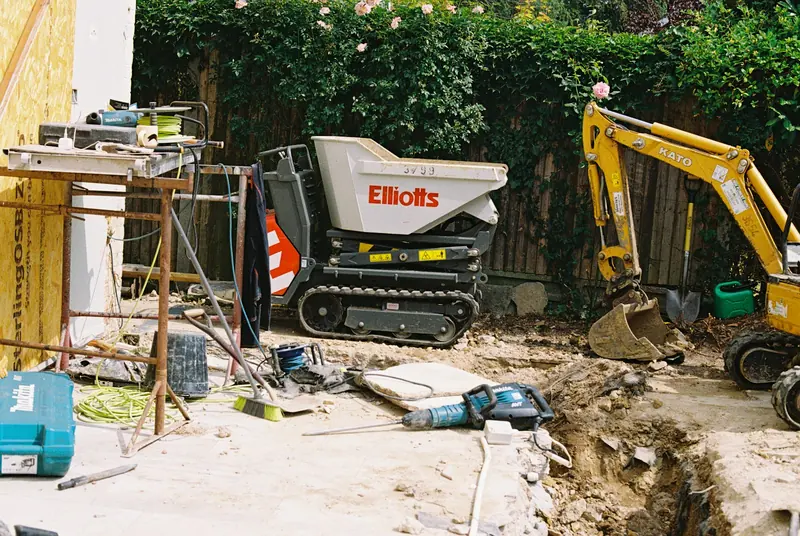
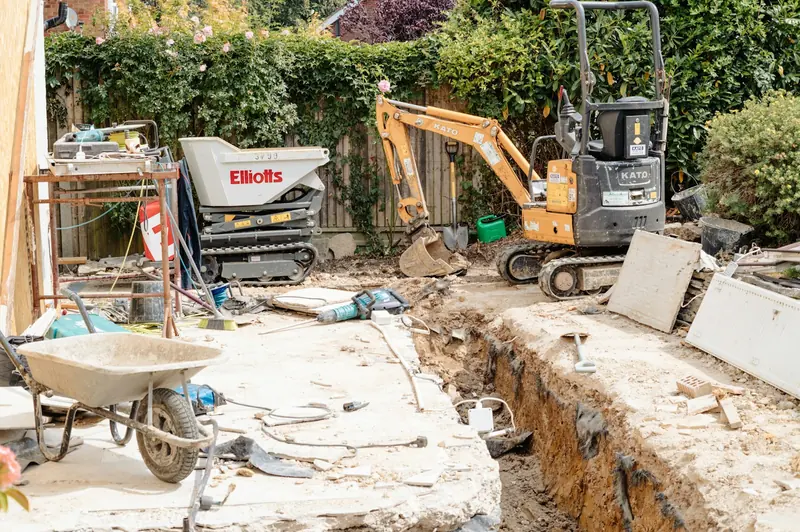
Groundworks is the trade where one bad dig can take a year's profit. You price what you can see, then the ground shows you what you couldn't: water, old foundations, rubble, a gas main nobody marked.
This guide is for owners of groundworks firms in the UK, from two-man digging teams to firms running several gangs for main contractors. It shows how to build a price that carries its own risk. Want a second pair of eyes on your next groundworks price? Book a free strategy call.
Where groundworkers lose money
The work is simple to describe and hard to price. Margin goes in five places:
- Muck-away priced by the load without knowing what class of waste it is
- Ground conditions included in a fixed price instead of excluded
- Plant standing idle while you wait for the engineer, the concrete or the client
- Outputs taken from memory, not from your own finished jobs
- Cash Weekly bills for plant, concrete and tipping against monthly payments with retention held back
Measure the job, then cost every line
Take off the quantities from the drawings or on site: trench lengths, widths and depths, slab areas, drainage runs, manholes, volumes of concrete and stone.
Then cost each item from your own outputs. How many metres does your gang actually dig and backfill in a day, on this ground, with this machine?
Worked example: strip foundations for a single-storey rear extension, 24 m of trench, 600 mm wide, 1 m deep (example figures)
| Line | Basis | £ |
|---|---|---|
| Labour | 2 operatives × 3 days = 6 man-days × £230 | 1,380 |
| Excavator | 3 days self-drive hire + delivery and collection | 570 |
| Tracked dumper | 3 days | 240 |
| Muck-away | 2 grab-lorry loads × £330, inert soil | 660 |
| Concrete | 14.4 m³ × £125 | 1,800 |
| Sundries | shuttering, cones, signage, fuel | 150 |
| Direct cost | 4,800 | |
| Price at a 28% floor (÷ 0.72) | 6,667 |
Your margin floor is overheads as a % of turnover plus the net profit you want. Groundworks carries more risk than most trades, so be honest about the number.
Classify the waste before you price the muck-away
Your muck-away firm's price includes landfill tax, and the tax depends on what the waste is. From 1 April 2026, in England and Northern Ireland:
Clean soil and stones can qualify for the lower rate (landscapers face the same choice on every patio: see landscaping margins). Soil mixed with rubble, timber, plastic or contamination usually does not. Scotland and Wales have their own landfill taxes, so check the local rate.
So before you price, find out what you are digging: a trial hole, the site history, a look at what is under the old patio. Then write the waste class you priced into the quote.
Pricing "cart away all spoil" as one fixed line. If the spoil turns out to be mixed or contaminated, the extra tipping cost is yours. Price muck-away per load for the class you expect, and treat anything else as a variation.
Want your muck-away, plant and outputs turned into a rate sheet you can trust?
Book a free strategy call.
Write the ground risk into the quote
You cannot price what you cannot see, so say so in writing. A groundworks quote should list:
- Ground you priced Type, depth to formation, dry or wet
- Exclusions Rock, running water and pumping, contaminated ground, old foundations and obstructions, unmarked services, archaeology
- Provisional sums for what is likely but unknown, such as deeper foundations if the building inspector asks for them
- Dayworks rates for anything outside the scope: labour per hour, plant per day, plus your percentage on materials
When you hit something different, stop. Photograph it, tell the client or main contractor the same day, and agree the price before you carry on.
Price the safety work, because it takes time
Two things on every dig take time and kit, so they go in the price:
- Buried services. Get the utility drawings. Then scan with a cable locator (CAT and Genny) before and during the dig, as the HSE's guidance on underground services expects. On larger sites, price a utility survey or ask the client to provide one.
- Excavation inspections. Under the CDM Regulations, a competent person must inspect excavations at the start of every shift, and after anything that could affect their stability.
Main contractors will also ask for operator cards for your plant drivers and for your RAMS before you start. Count the time to prepare them in your overheads, not as a favour.

The Cash Flow & Margin Blueprint
How to keep cash ahead of plant, concrete and muck-away bills when the main contractor pays monthly.
Get the free guideProtect the cash between the dig and the payment
Groundworks is front-loaded. Plant hire, concrete and tipping are paid weekly or on delivery. A main contractor pays monthly, often 30 days or more after your application, with retention held back.
- Apply for payment on time, every time, with quantities and photos
- Know your rights when a pay less notice arrives, and chase retention on the date it is due
- For private clients, take staged payments tied to stages you can prove: dig, concrete, drainage, backfill
- Keep a 13-week cash forecast so you never take a job you cannot fund
For a four-minute score of your pricing, cash, sales and systems, take the free Construction Business Scorecard.

Grow from one gang to several
Growing a groundworks firm is not about more machines. It is about margins you can trust and cash that keeps up with the work.
The owners we mentor usually fix things in this order:
- Rates from their own jobs
- Quotes with the risk written in
- Weekly job-costing: quoted vs actual hours, plant days and loads on every job
- A foreman who can run a gang without them
Sviat Jay runs a working construction company, Craftex, and mentors owners one to one himself. There is no standard program for hundreds of firms: one owner is strong on site, another at winning work. He finds those strengths and builds on them.
He is aiming for results in about 4 months rather than 1–3-year programs. To start with your own rates, book a free strategy call.
Adam & Ali: stuck at £500K for 3 years, then a £528K project
£92K signed in 8 days, then a £528K project at about 34% margin, in 4 months. Individual results, not typical or guaranteed.
If you want rates and tenders built for you, see our construction estimating services.
Want to know which of your groundworks jobs really make money?
Book a free strategy call.
Before you send your next groundworks price
Tax and safety points are general information as of October 2026. Check details with your accountant, waste carrier and health and safety adviser.
Before you go
- Quantities are measured and costed from your own outputs
- Muck-away is priced for a stated waste class
- Ground risks are excluded or covered by provisional sums
- Service scanning and inspections are in the price
- Staged payments or applications match your cash needs