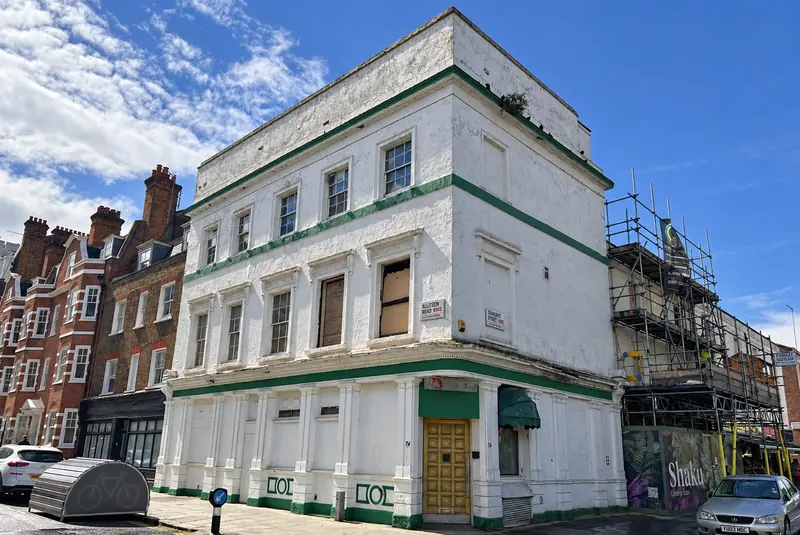
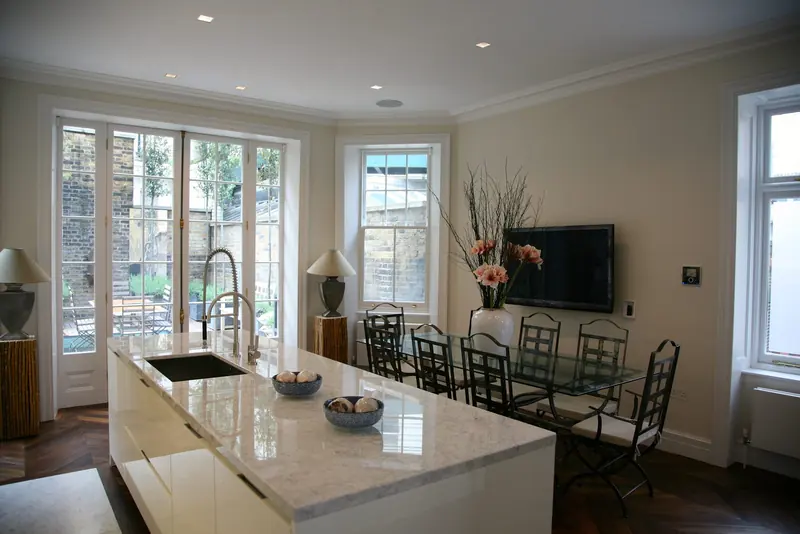
How to Get High-End Clients as a London Builder

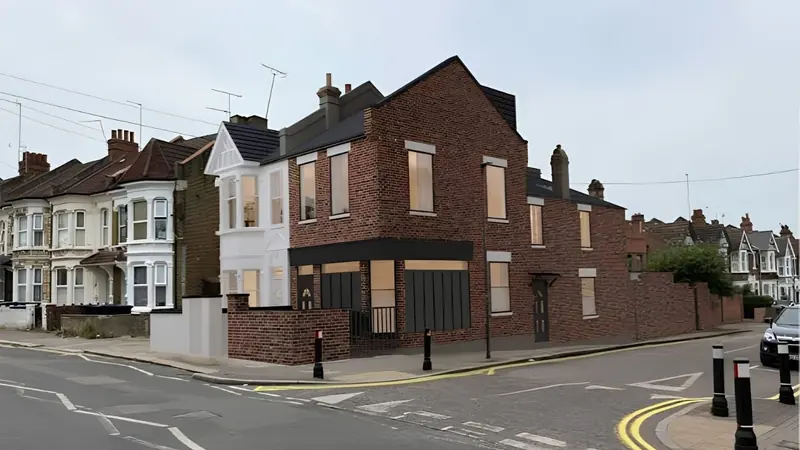
The short answer
High-end London clients rarely find builders on lead platforms. They come through architects, interior designers, past clients and their neighbours, and they buy certainty, not the lowest price. Build a portfolio and a proper company presentation first, get in front of small design studios, then price properly and present every quote live.
- They buy certainty, not cheap. Programme, communication, a tidy site and a finish that matches the design matter more than the last £5K.
- They come through people. Architects, interior designers, past clients and neighbours, not Checkatrade or MyBuilder. Small studios of 3–10 people are the door.
- Proof comes first. Two or three finished projects photographed properly, a company presentation and real references.
- Price like a premium firm, one flagship at a time. Allowances, provisional sums, a programme and stage payments, presented live.
A £15K bathroom from a lead platform and a £250K refurbishment in Belgravia take roughly the same effort to win. One of them pays for your year. The other keeps you busy.
Craftex, Sviat's London design and build company, has spent 10+ years in premium residential and commercial work in London. This is how high-end clients actually find their builders, and how a growing firm gets in front of them. If you want help getting there, book a free strategy call.
What high-end clients are really buying
They're not buying the cheapest price. Most of them have been burned by a builder before, or know someone who has. They're buying certainty.
- A programme they can plan around: moving dates, school terms, a rental they're paying for.
- Communication: one point of contact, weekly updates, problems raised early with a solution.
- A clean, discreet site: protection, tidy hoarding, respect for neighbours in a street where everyone talks.
- A finish that matches the design: joinery, polished plaster, stone, lighting, all done the way the designer intended.
- Paperwork that looks professional: a clear quote, a contract, stage payments, certificates at handover.
Price still matters. But at this level a very low number worries people. They assume you've missed something, or that you'll make it back on extras.
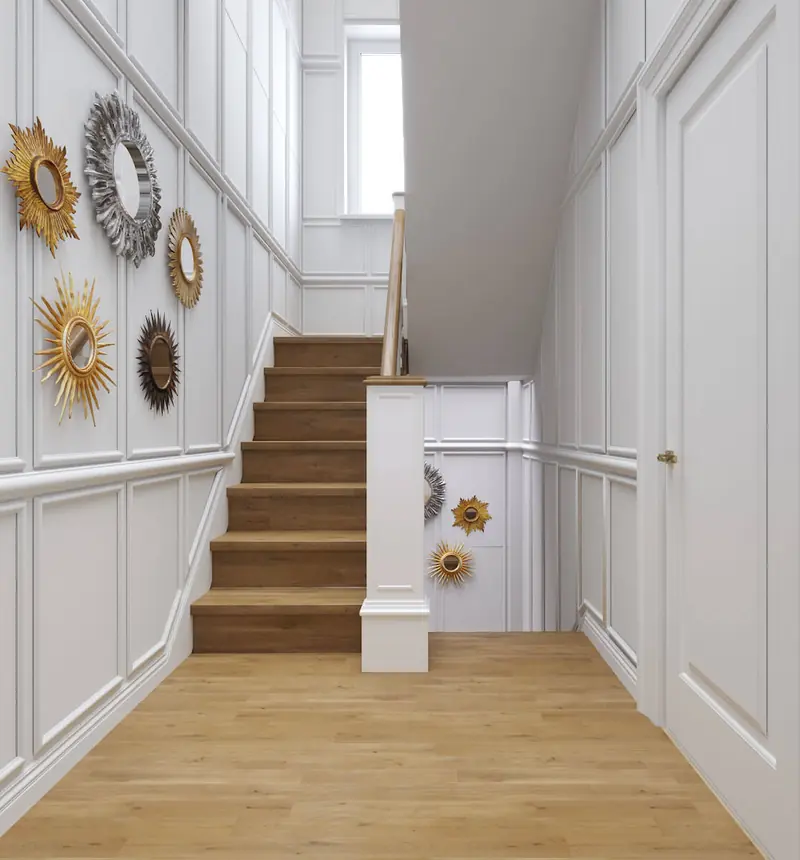
Where high-end clients come from in London
Almost never from lead platforms. Checkatrade and MyBuilder are built for homeowners hiring one tradesperson for a small job. Premium clients find builders through people they trust.
| Source | Why it works | How to start |
|---|---|---|
| Small architecture practices (3–10 people) | Their clients always ask them for a builder and a budget | Call, then visit with your portfolio; offer to help price a live project |
| Interior designers (1–15 people) | Many take the whole contract and value reliability over price | Offer to price one project fast and properly |
| Past clients and their neighbours | Same street, same type of house, same budget | Ask every happy client directly; let the finished job do the selling |
| Planning approvals in your target boroughs | Shows who's about to build, with the architect named | Watch approvals and call the architect and the client |
| Paid industry events | Developers, architects and designers in one room | Pick £150+ tickets; the £10–40 events are full of other trades |
Adam, a builder we mentored, signed a £49K extension from his loft client's neighbour. Later he won a £528K project through an architect he already knew, with an estimated profit of £175–180K. Individual results, not typical or guaranteed.
Skip the big firms — their projects are huge and their tender process is strict. Small studios struggle to find reliable builders, and that's your opening.
For the full architect approach, with call scripts, read how to get work from architects.
Want a plan to get in front of London's design studios?
Book a free call and we'll build it with you.
The proof you need before the first meeting
A designer will put their reputation on the line when they recommend you. Make it easy for them.
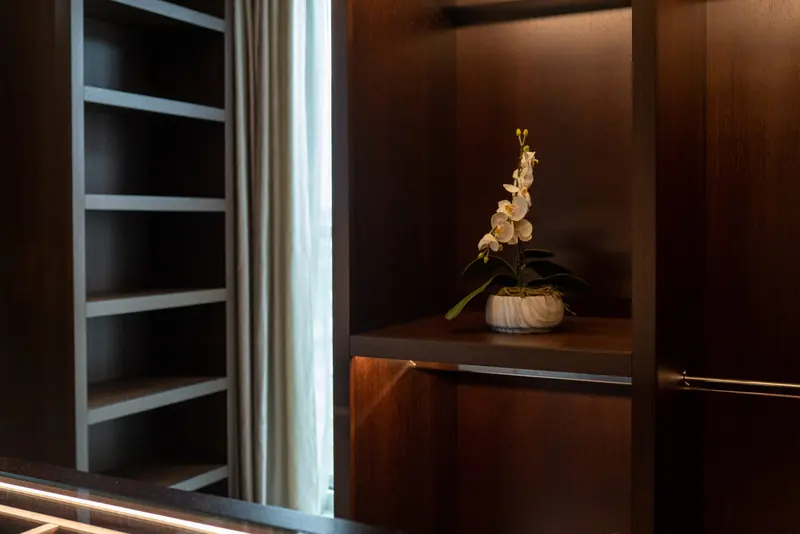
- Two or three finished projects, photographed properly. Daylight, wide shots and details. Phone photos of half-finished rooms don't work at this level.
- A short company presentation: who you are, what you build, your team, your process, your insurance.
- References who answer the phone, ideally a designer or architect as well as a homeowner.
- A proper written contract. Many premium jobs are better on a bespoke contract than an off-the-shelf form. See JCT vs a bespoke building contract.
- A website and Google profile that match. The client will look you up before the first meeting.
If you don't have premium projects yet, start one level down: a well-finished kitchen and rear extension, photographed properly, is your first flagship.
How to win the first premium project
When you get the call, the way you handle the next two weeks decides it.
- Speak to both the designer and the client before you price. Make sure the client gets your quote at the same time as the architect or designer.
- Visit the site and ask the real questions: budget range, programme, who decides, what went wrong last time.
- Price with allowances and provisional sums for everything not yet chosen: stone, joinery, ironmongery, lighting.
- Add a programme and stage payments to the quote. It shows you've actually planned the job.
- Present it live, in person or on a video call. Walk them through the value before they see the total.
- Offer options, not discounts: a different stone, a phased programme, a simpler detail.
Dropping your price to win the first high-end job. You set the client's expectation of your real rate, and you fund the extra quality out of your own pocket.
Price it like a premium contractor
Premium work carries more risk: longer programmes, expensive materials, more design change. Your price has to carry it.
- Build from real costs: labour, materials, subcontract packages with two or three prices each, prelims as a line.
- Then overheads and margin: at Craftex we target margins of 25–40% on our own projects. Your figure depends on your costs and risk.
- Write exclusions and assumptions clearly, so design changes become priced variations, not free extras.
If raising your prices feels risky, read how to charge more without losing clients. Our Builder's Pricing Playbook has the full method.
Turn one client into the next five
High-end London is a small world. Designers talk to designers. Neighbours watch your hoarding for six months.
- Ask for the referral at handover, when the client is happiest.
- Run a referral program: 5–10% of the contract value, paid on signing, presented as your company's affiliate program.
- Photograph every finished job and send the designer the photos for their portfolio too.
- Stay in touch: maintenance visits, a call at the one-year mark, an invitation to see your next project.


Ready to stop competing on price for small jobs?
Book a free strategy call.
Getting there faster
Moving from domestic jobs to premium clients is a change in positioning, pricing and sales, not just a bigger portfolio. BizMentor is one-to-one mentoring with Sviat, who runs Craftex in London today.
He works on your positioning, your proof and your pricing with you. It is built for results in about 4 months, not 1–3-year programs. To talk about your next premium client, book a free strategy call. Here's what a construction business advisor or mentor actually does.
See where your business stands first with the free 4-minute Construction Business Scorecard. If you'd rather have the website and enquiry side done for you, see our construction marketing and lead generation service.
This is general information from a contractor's experience, not legal or financial advice. On the tools and under £500K a year? Watch our free training first.
Before you chase your first premium client
- Two or three finished projects photographed properly
- A company presentation and references ready to send
- A list of 20 small architecture and design studios in your target areas
- A quote format with allowances, a programme and stage payments
- A referral program you mention at every handover