How to Price Bricklaying Jobs: A Guide for UK Bricklayers

The short answer
Count bricks and blocks from the drawings, divide by your gang's real daily output, cost the gang days at true cost, add the extras a rate per thousand ignores (openings, ties, insulation, scaffold waits, weather), then apply your margin.
- A rate per thousand is a check, not a price. Published 2026 guides put labour at about £400–£700 per 1,000 bricks, £550–£900 in London and the South East. Your price comes from your own gang's output.
- Your gang day is the unit. Two bricklayers and a labourer cost the same whether they lay 1,200 bricks or wait for the scaffold.
- Extras are where money goes. Openings, reveals, lintels, cavity trays, ties, insulation, piers, arches and soldier courses all slow a gang down.
- Protect yourself on brick prices and weather. Time-limit supply prices and allow winter weather days.
Ask ten bricklayers how they price and most will give you a number per thousand. It is quick, everyone understands it, and on a long run of plain facing brick it can work.
On almost everything else, it loses money. Openings, cavity ties and insulation, piers, arches, soldier courses and scaffold waits all eat a gang's day. None of them change the number of bricks.
This guide shows how to price bricklaying jobs from your gang's real output. It is for UK bricklaying business owners, from a two-and-one gang to firms running several gangs. Want a second pair of eyes on your rates? Book a free strategy call and we'll go through a real quote with you.
Why a rate per thousand is not enough to price bricklaying jobs
Every lift of scaffold, every opening and every bag of ties is time your gang spends not laying bricks. Count those items and the price looks very different.
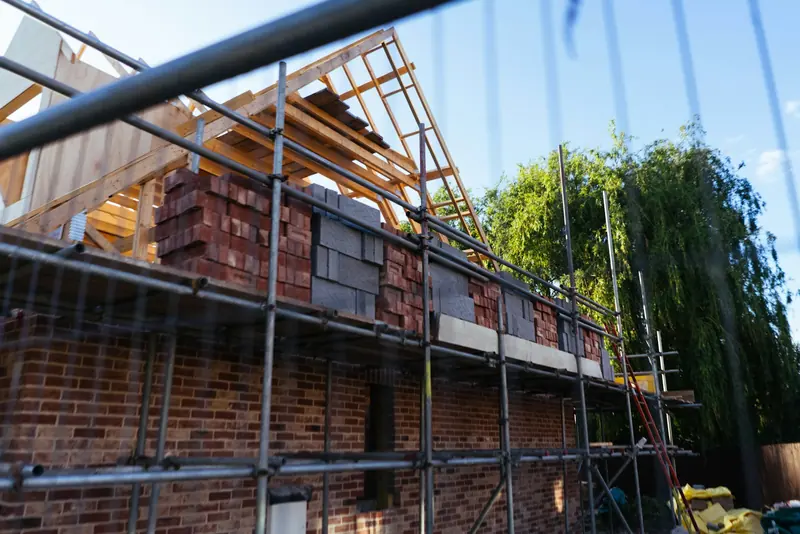
Published 2026 guides put bricklaying labour at roughly £400–£700 per 1,000 bricks nationally, and £550–£900 in London and the South East. A skilled bricklayer lays about 500 facing bricks a day as a common benchmark. That drops to 300–400 on fiddly work.
That range is wide for a reason. The same thousand bricks can be:
- a straight garden wall your gang lays in a morning, or
- the outer skin of an extension with bi-fold openings, brick-on-edge sills and a soldier course, which takes twice as long.
A per-thousand rate prices the bricks. You are paying for the gang's time. So price the time.
Step 1: count from the drawings
Measure each wall type separately, deducting openings:
| Wall type | What to count | Rule of thumb |
|---|---|---|
| Facing brick, half-brick skin | Bricks | About 60 per m² |
| Blockwork inner leaf | Blocks | About 10 standard blocks per m² |
| Common brick or engineering brick below DPC | Bricks | About 60 per m² per half-brick thickness |
| Feature work (soldiers, arches, piers, corbels) | Linear metres or items | Price separately |
Add your own wastage allowance from past jobs, higher for cut-heavy work and special bricks.
Step 2: know your gang's real output
Your best pricing tool is a notebook. For every job, record what each gang laid each day: bricks, blocks and the type of work.
After a few jobs you will know your own figures. You will see how many facing bricks your gang lays on plain runs, extension work and feature work, and how many blocks on inner leaves. These are the only output figures you can safely price from, because they include your gang's pace, your sites and your labourer.
Price from your own records, not memory. A rates library built from your finished jobs is what turns guessing into estimating.
Step 3: cost the gang day at true cost
The gang day is your unit of cost. Work it out properly:
- Each bricklayer and labourer's pay (or subcontract rate), including employer costs if they are employed
- Travel and parking
- Non-productive time Setting out, waiting for scaffold lifts, weather stoppages, snagging visits
- Small plant and consumables Mixers, saws and blades, levels, lines
Say a two-and-one gang costs you £650 a day all-in. Every day they wait for a scaffold lift is £650 of cost a per-thousand price never covered.
Want your gang's real output turned into a rates library you can price from?
Book a free call.
Step 4: price the extras as lines
These items slow a gang down and belong on the quote as their own lines, or at least in your hours:
- Openings and reveals Closing cavities, cavity trays, lintels set and bedded
- Cavity work Wall ties, insulation boards or batts, cavity cleaning
- Feature brickwork Soldier courses, brick-on-edge sills, arches, piers, corbelling, decorative bonds
- Matching existing Toothing in, sourcing reclaimed bricks, matching mortar colour
- Pointing style Struck, recessed or tooled joints that take longer than a bucket handle
- Setting out and scaffold waits Lifts the scaffolder hasn't adapted yet
- Weather In winter, allow days when frost or rain stops the gang
Worked example: single-storey rear extension, cavity walls, labour only (example figures)
| Item | Quantity | Gang days | £ (at £650 per gang day) |
|---|---|---|---|
| Facing brick outer skin | 2,700 bricks (45 m²) | 2.7 | 1,755 |
| Block inner leaf | 450 blocks | 1.5 | 975 |
| Openings, lintels, cavity trays, ties, insulation | 3 openings | 1.0 | 650 |
| Setting out and scaffold waits | — | 0.5 | 325 |
| Direct labour cost | 5.7 | 3,705 | |
| Price at a 25% margin floor (÷ 0.75) | 4,940 |
At £550 per thousand facing bricks you would have quoted about £1,485, and the blockwork, openings and waits would have been free. Even at £550 per thousand for bricks and blocks counted together you would quote around £1,730. Both are far below what the gang actually costs.
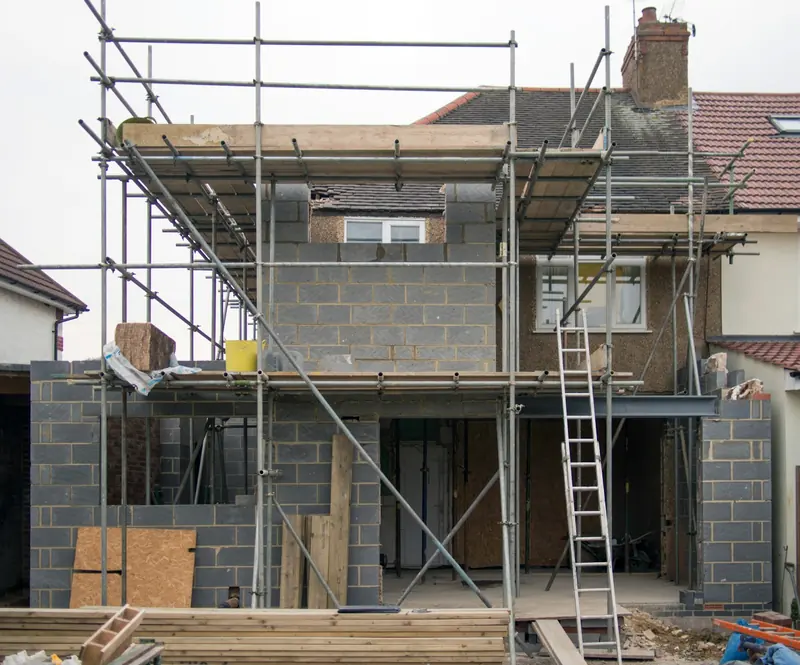
Quoting labour per thousand on an extension and then "throwing in" the blockwork and cavity work. On cavity walls with openings, those items can be more than half of the gang's time.
Step 5: protect yourself on materials and timing
On supply-and-fix work, bricks are a big share of the price and the price can move.
- Time-limit the quote: state how long material prices are valid for.
- Name the brick, or use a provisional sum per thousand if the client has not chosen one.
- Say who pays for extra bricks if the client changes the brick or the order comes in a different batch.
- If prices rise after you have signed, see material prices went up after the quote.

The Builder's Pricing Playbook
The package-by-package estimate sheet and the before-you-send quote checklist, so every brickwork price covers the job.
Get the free guidePricing work for housebuilders and main contractors
Housebuilders often pay bricklaying gangs per thousand or per plot. That can work if the extras are agreed separately in writing: piers, arches, soldier courses, chimneys, scaffold waits and returns for snagging.
- Get the plot drawings and count each house type before agreeing a rate.
- Agree in writing which items are paid on top of the rate.
- Check your gang's CSCS cards: a skilled card needs an NVQ Level 2, and Industry Accreditation cards expired by 31 December 2024.
- Read the subcontract for payment dates, retention and contra-charges.
For the commercial side, see how to get subcontract work from main contractors.
Want every brickwork quote to cover the gang, the extras and your margin?
Book a free strategy call.
When a day rate makes sense
Published 2026 guides put bricklayers at roughly £200–£300 a day nationally and £300–£380 in London and the South East. A day rate is fair for small repairs, rebuilding a damaged section, or work where nobody can see the extent until it is opened up.
For anything you can measure, a fixed price built from gang days protects both you and the client. More on day rates in our builder day rate guide.
At BizMentor, Sviat Jay works through pricing one-to-one with trade business owners. That means rates from your own jobs, quotes clients sign, and job costing that shows where the hours went. He runs Craftex, a working construction company that buys brickwork packages, so he prices this work every week.
To build your own gang-day cost with us, book a free strategy call. Owners who don't need one-to-one start in a small group with regular one-to-one calls, and the aim is results in about 4 months. To see where your business stands first, take the free 4-minute Construction Business Scorecard.
Before you send your next brickwork quote
- Bricks and blocks counted from the drawings, wall type by wall type
- Gang days based on your own recorded output for this kind of work
- Openings, cavity work, features and scaffold waits priced
- Material prices time-limited and the brick named
- Winter weather days allowed for