How to Price Tiling Jobs: A Guide for UK Tiling Business Owners

The short answer
Split every tiling job into strip-out, preparation, setting out, laying, grouting and finishing. Cost each from your own hours per m² for that tile format, add materials and a minimum charge, then apply your margin. Use published m² rates only as a sense check.
- An m² rate is a sense check. Published 2026 guides put labour at about £25–£40/m² for floors and £30–£45/m² for walls outside London (£30–£52 and £38–£58 in London). Your price comes from your own hours.
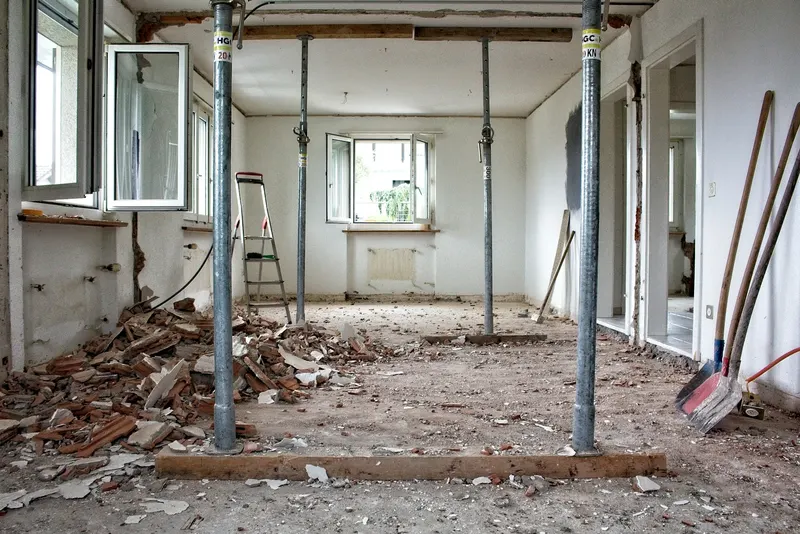
- Prep is where tilers lose money. Stripping old tiles, boarding, tanking, levelling and setting out can take as long as the tiling itself.
- Format changes the hours. Large-format porcelain needs a flat bed and two people; mosaics and herringbone mean many more pieces and cuts.
- Client-supplied tiles need terms. Shortfalls, breakages and batch shade differences cost you days unless your quote says who pays.
Most tilers price by the square metre because clients understand it and it is quick on the phone. On a clean, flat floor with standard 600 × 300 tiles it can work.
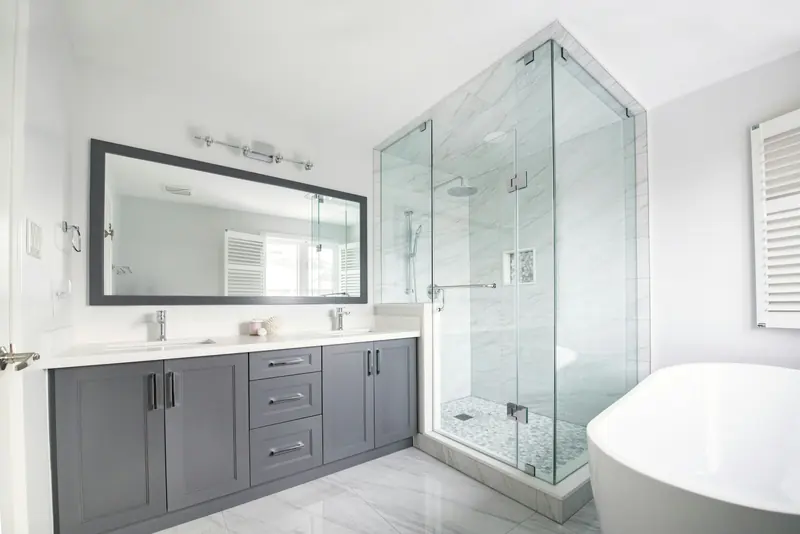
On most real jobs it doesn't. Think of a bathroom with old tiles to strip, walls to board, a shower to tank and a floor to level. Add a niche the client saw on Instagram, and it takes far longer than the square metres suggest.
This guide shows how to price tiling jobs so the price covers the whole job. It is for owners of UK tiling businesses and building firms with their own tilers. Want your rates checked against a real bathroom? Book a free strategy call.
Why an m² rate alone is no way to price tiling jobs
Clients see the finished tiles. You are paid for the hours underneath them. That means the strip-out, boards, tanking, levelling and the setting out that makes grout lines run true.
Published 2026 price guides put tiling labour at roughly:
| Work | Outside London | London & South East |
|---|---|---|
| Floor tiling | £25–£40 per m² | £30–£52 per m² |
| Wall tiling | £30–£45 per m² | £38–£58 per m² |
| Minimum job charge | £150–£200 | £180–£260 |
The same guides price removal of old tiles separately, and note that large formats and mosaics take longer. That is the point: the square metre rate covers laying tiles on a ready surface. Everything that makes the surface ready, and everything that makes the tiles harder to lay, is extra time.
Step 1: split the job into tasks
Price every tiling job in the same order, so nothing is forgotten:
- Strip-out: removing old tiles and adhesive, plus waste disposal
- Preparation: boarding walls, priming, repairing backgrounds, levelling floors
- Waterproofing: tanking in showers and wet areas, with curing time
- Setting out: finding the centre lines and the cuts that look right
- Laying: walls and floors separately, by tile format and pattern
- Details: niches, mitred or trimmed external corners, window reveals, steps
- Grouting, silicone and sealing: including sealing natural stone
- Clean and snag
Step 2: know your hours per m² by tile format
Your laying speed changes with the tile, so keep separate figures from your own jobs:
| Format | What slows you down |
|---|---|
| Standard wall and floor tiles | Cuts around obstacles, pipes and corners |
| Large-format porcelain | A very flat substrate, more adhesive coverage, often two people to lift and place |
| Mosaic | Many more pieces and joints per m² |
| Herringbone and diagonal | Many more cuts, more setting out, more wastage |
| Natural stone | Sealing, colour variation, careful handling |
Record actual hours per m² on every job, by format. After a few months you have a rates library you can price from with confidence.
Waste allowance: order quantities with a wastage allowance from your own records, higher for diagonal, herringbone and large-format work where each broken tile costs more.
Want your hours per m² turned into a rates library you can quote from?
Book a free call.
Step 3: cost it and apply your margin
Worked example: bathroom refit tiling, client-supplied tiles (example figures)
| Task | Hours | £ |
|---|---|---|
| Strip old tiles and adhesive | 6 | 168.00 |
| Board walls | 8 | 224.00 |
| Tank shower area | 3 | 84.00 |
| Level floor | 2 | 56.00 |
| Setting out | 2 | 56.00 |
| Wall tiling (24 m²) | 26.4 | 739.20 |
| Floor tiling (5 m²) | 6 | 168.00 |
| Shower niche | 3 | 84.00 |
| Grout, silicone, clean and snag | 7 | 196.00 |
| Labour (63.4 h at £28 true cost) | 63.4 | 1,775.20 |
| Materials (boards, tanking kit, adhesive, grout, levelling, trims, silicone) | 640.00 | |
| Waste disposal | 90.00 | |
| Direct cost | 2,505.20 | |
| Price at a 30% margin floor (÷ 0.70) | 3,579 |
Priced at a typical £38 per m² for 29 m² of tiling, the labour would come to £1,102. The other hours, strip-out, boards, tanking, levelling, setting out and the niche, are real work that a square-metre rate leaves unpaid.

Quoting "£X per m²" over the phone before you have seen the walls. Give a range, visit, then send a written quote that lists every task and every exclusion.
Step 4: write the terms that protect the price
The quote is where most tiling disputes are won or lost. Put these in writing:
- Client-supplied tiles: the client orders enough from one batch, plus a wastage allowance, checks them for shade and damage before you start, and pays for return visits caused by shortfalls or late deliveries.
- Backgrounds: repairs found after strip-out are extra, priced and approved before you continue.
- Tile choice changes: a change to large format, mosaic or a new pattern is re-priced.
- Underfloor heating: the electrical connection is done by an electrician; in a bathroom that work can be notifiable under Part P.
- Drying and curing times for levelling compound and tanking are part of the program.
If the job grows after you start, price the extra before you do it: construction variations: how to get paid.
The Builder's Pricing Playbook
The package-by-package estimate sheet and the before-you-send quote checklist, so every tiling price covers the job.
Get the free guidePricing for builders and commercial clients
Builders, bathroom companies and main contractors often ask tilers for a rate per m². You can give one, as long as it comes with a schedule of extras:
| Item | How to price it |
|---|---|
| Walls and floors by format | Per m², from your own hours |
| Strip-out, boarding, tanking, levelling | Per m², separately |
| Trims, external corners, mitres | Per linear metre |
| Niches, steps, cut-outs | Per item |
| Return visits caused by others | Per visit or day rate |
For commercial work (shops, salons, restaurants, washrooms), expect drawings, programme dates, monthly applications and sometimes retention, and check your team's CSCS cards. See how to get subcontract work from main contractors.
Want every tiling quote to pay for the prep and leave a margin?
Book a free strategy call.
When a day rate beats a fixed price
A day rate is fair for small repairs, re-grouting, or work where nobody can see what is behind the old tiles. For anything you can measure, a fixed price built from your hours protects both sides, and lets you earn more by getting faster. For day rates in general, see our builder day rate guide.
At BizMentor, Sviat Jay works through pricing one-to-one with trade business owners. That means rates from your own jobs, quotes clients sign, and job costing that shows which jobs make money. He runs Craftex, a working construction company that prices bathrooms and commercial fit-outs every week.
To price your next tiling job with us, book a free strategy call. Owners who don't need one-to-one start in a small group with regular one-to-one calls. The aim is results in about 4 months rather than 1–3-year programs. To see where your business stands first, take the free 4-minute Construction Business Scorecard.
Before you send your next tiling quote
- Walls and floors measured separately, with tile format and pattern noted
- Strip-out, boarding, tanking and levelling priced as their own lines
- Hours per m² taken from your own jobs for that format
- Terms for client-supplied tiles and hidden backgrounds written in
- Minimum charge applied to small jobs