Should Builders Charge for Quotes? When and How Much


The short answer
Give a ballpark range free, then charge a fixed fee for the detailed estimate on bigger jobs, credited against the build. Price-checkers drop out and you get paid for your time.
- Free: a ballpark range on the first call. It filters out price-checkers in two minutes.
- Paid: the detailed estimate on bigger or complex jobs, credited against the contract if they go ahead.
- Set the fee from your time: hours to survey, measure, price and present × your hourly cost, plus a margin.
- Sell what they get, not the fee. A priced schedule they can rely on, not a number on a page.
You spend Saturday morning on a site visit, two evenings getting subcontractor prices and pricing it all up, then send a detailed quote. The client thanks you, takes your breakdown to two cheaper builders, and you never hear from them again.
If that's happened more than once, you're doing free estimating for your competitors. So should builders charge for quotes? Here's how professional builders handle it: what to give away, what to charge for, and how to say it so serious clients say yes. Want help setting it up for your business? Book a free strategy call.
The problem with free detailed quotes
A detailed quote on a £60K extension can take a day or two of your time. That covers the visit, measuring, scope, sub prices, pricing every package and writing it up. If you win one in five, every job you win carries the cost of four you priced for nothing.
Free detailed quotes also attract the wrong clients. Someone collecting five prices to pick the cheapest costs you the same evening as someone ready to build with you. Has a client come back with a cheaper quote and asked you to match it? Here's what to say instead of dropping your price.
What to give free, and what to charge for
The answer isn't "charge for everything". It's a clear line between a quick indication and a professional estimate.
| Stage | Free or paid | What the client gets |
|---|---|---|
| First call | Free | A qualifying chat and a ballpark range: "projects like this are usually £60–80K" |
| Site visit | Free for qualified clients | You see the job, they see you; you agree the next step |
| Detailed estimate | Paid, fixed fee | Survey, scope and spec, priced schedule, programme, presented in a meeting |
| Contract | Fee credited | If they go ahead, the fee comes off the contract sum |
The ballpark does most of the filtering. A client who drops out at "£60–80K" was never going to build at £60K.

Giving a detailed, itemised breakdown for free to a client you haven't qualified. That breakdown is your expertise. Many clients use it to get cheaper prices elsewhere.
Still doing free estimates for your competitors?
Book a free call with our team. We'll look at your sales process and where a paid estimate fits.
When to charge, and when not to
Charge for the estimate when:
- The job is big or complex Extensions, refurbishments, loft conversions, commercial fit-outs.
- There's design to do No drawings yet, or you're helping shape the spec.
- You need sub prices Several packages to price with specialist quotes.
- The client is shopping around They've said they're getting four or five prices.
Don't charge, and keep it quick, when the job is small and simple, or a repeat client asks. Below your minimum job size, give a quick fixed quote or say no politely. If you don't have a minimum job size yet, set one.
How to set the fee
Price the estimate like any other job: your time, at your real cost, plus a margin.
| Line | Example: £60–80K extension |
|---|---|
| Survey and measure | 3 hours |
| Scope, spec and getting sub prices | 5 hours |
| Pricing and writing the estimate | 4 hours |
| Presentation meeting | 2 hours |
| Total time | 14 hours |
| × cost per hour (your wage and overheads) | £45 |
| Cost of the estimate | £630 |
| Fee at a 30% margin (£630 ÷ 0.70) | £900 |
The example is illustrative; work out your own true hourly cost. Tell the client the fee upfront, in writing, and say it comes off the contract if they go ahead.
What goes in a paid estimate pack
If you charge for it, it has to be worth more than a free quote. A good pack includes:
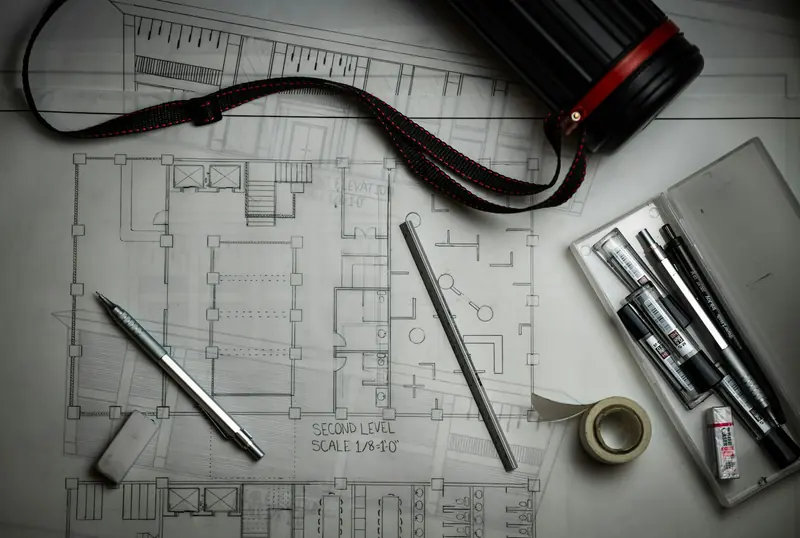
- A summary of the client's goals and budget, in their words.
- Scope and specification by package: strip-out, structure, M&E, plastering, joinery, finishes.
- A priced schedule per package, with allowances and provisional sums clearly marked.
- Inclusions and exclusions, so nothing is "I thought that was included".
- A programme ("6–8 weeks, not 3–5 months") and a staged payment schedule.
Then present it live, in person or on a video call. Never just email it. The client sees exactly what they're paying for, and you're there to answer questions.
Want a paid first stage built into your sales process?
Book a free strategy call.
How to sell it: the words to use
Most clients have never been asked to pay for an estimate, so explain it calmly and simply. Change the words, keep the order.
| Moment | What you say |
|---|---|
| After the ballpark | "That's the range for a job like this. To give you a price you can actually build to, we do a detailed estimate." |
| What they get | "We survey, write the full spec, get prices from our electrician, plumber and plasterer, and give you a priced schedule and programme. Then we sit down and go through it together." |
| The fee | "It's a fixed £[fee]. If you go ahead with us, it comes off the contract, so it costs you nothing extra." |
| "Others quote for free" | "They do. A free quote is usually a number on a page. Ours is a schedule you can rely on, so there are no surprises halfway through." |
| Close | "Shall I book the survey for [day]? I'll send the details in writing today." |
Some clients won't pay a fee that's credited back if they build with you. They're usually telling you they plan to build with someone else.
Want us to go through your own sales script? Book a free strategy call.
Homeowners: cancellation rights on a paid estimate
If you agree a paid estimate with a homeowner at their home, by phone or online, it can count as an off-premises or distance contract. Then the consumer usually has 14 days to cancel. Give them the required information and cancellation form in writing.
If they want you to start within the 14 days, get that request in writing. Our guide on the 14-day cancellation rules for builders explains what you can charge.
This is general information, not legal advice. For your situation, speak to a solicitor.
What it looks like when the sales process changes
A paid first stage is one piece of a sales process you lead, instead of following the client. The others are qualifying before the visit, presenting quotes live and following up until you get an answer. Here's how to follow up a quote and how to qualify leads before you quote.
Clayton, a plasterer, signed a £10K project the day after our call, with £5K upfront and staged payments.
£10K project signed the day after our call
Clayton, plasterer: £5K upfront plus staged payments. Individual results, not typical or guaranteed.
Sviat Jay runs a working construction company, Craftex, and mentors owners one-to-one on their own sales process, from the first call to the signed contract. Most owners see results in about four months. To see which part of your business to fix first, take the free 4-minute Construction Business Scorecard.

The Sales Blueprint for UK Builders
8 stages, scripts, the paid first stage and your funnel numbers. 13 pages, free.
Get the free guideChecklist: stop pricing for free
On the tools and under £500K a year? Watch our free training first.
Before you go
- Every first call ends with a ballpark range
- You have a minimum job size and stick to it
- Bigger jobs get a paid estimate, credited against the contract
- The fee is priced from your real hourly cost
- Every estimate is presented live, never just emailed