Painting & Decorating Business Profit Margins: 5 Steps to Keep More


The short answer
In decorating, labour is most of the cost and preparation is where the hours hide. Price prep separately, charge for every extra coat and job-cost interiors and exteriors apart.
- Labour is most of your cost. In our example interior repaint, labour is 82% of direct cost, so hours decide the margin.
- Prep is its own line. 12 extra hours of filling and sanding took our example from a 30% to a 20% margin.
- Plan the year around exteriors. Budget turnover by month and fill the wet months with interiors and commercial work.
- A colour change is a variation. Another coat means more hours and paint, priced and approved before you start.
A decorating business profit margin in the UK is decided by hours, and most of them hide in the preparation. This page shows how painters and decorators price prep, coats and the slow months so the profit stays. Want a second opinion on your rates? Book a free strategy call.
What decides a decorator's margin
Paint is cheap next to the hours it takes to put it on properly. In decorating, the hours are the job.
That changes where margin leaks:
- Preparation Filling, sanding, caulking and masking that take longer than quoted
- Extra coats Colour changes and poor surfaces
- The calendar Exterior work that stops when the weather turns
- Other trades Damage to finished work you return to fix
Price preparation as its own line
On decorating, labour is most of the cost. Preparation is where the hours hide — price it as its own line.
Worked example: three-bed interior repaint (example figures)
| Stage | Hours | £ |
|---|---|---|
| Protection and preparation | 24 | 657.60 |
| Coats | 40 | 1,096.00 |
| Snagging | 6 | 164.40 |
| Paint and sundries | — | 420.00 |
| Direct cost | 70 | 2,338 |
| Price at 30% floor (÷ 0.70) | 3,340 |
Labour is 82% of the direct cost. If the walls need 12 more hours of filling and sanding than you allowed, cost rises to £2,667 and gross margin falls to about 20%. Not sure how many prep hours your jobs really take? Book a free strategy call.
Every hour is costed at £27.40 — the true cost of a decorator on £18 an hour once employer NI, pension and holiday are in. The same figure tells you what it costs to get off the tools and pay someone else for your hours.
Show "preparation" on the quote with what it includes. When the surfaces are worse than described, you have a line to point to.
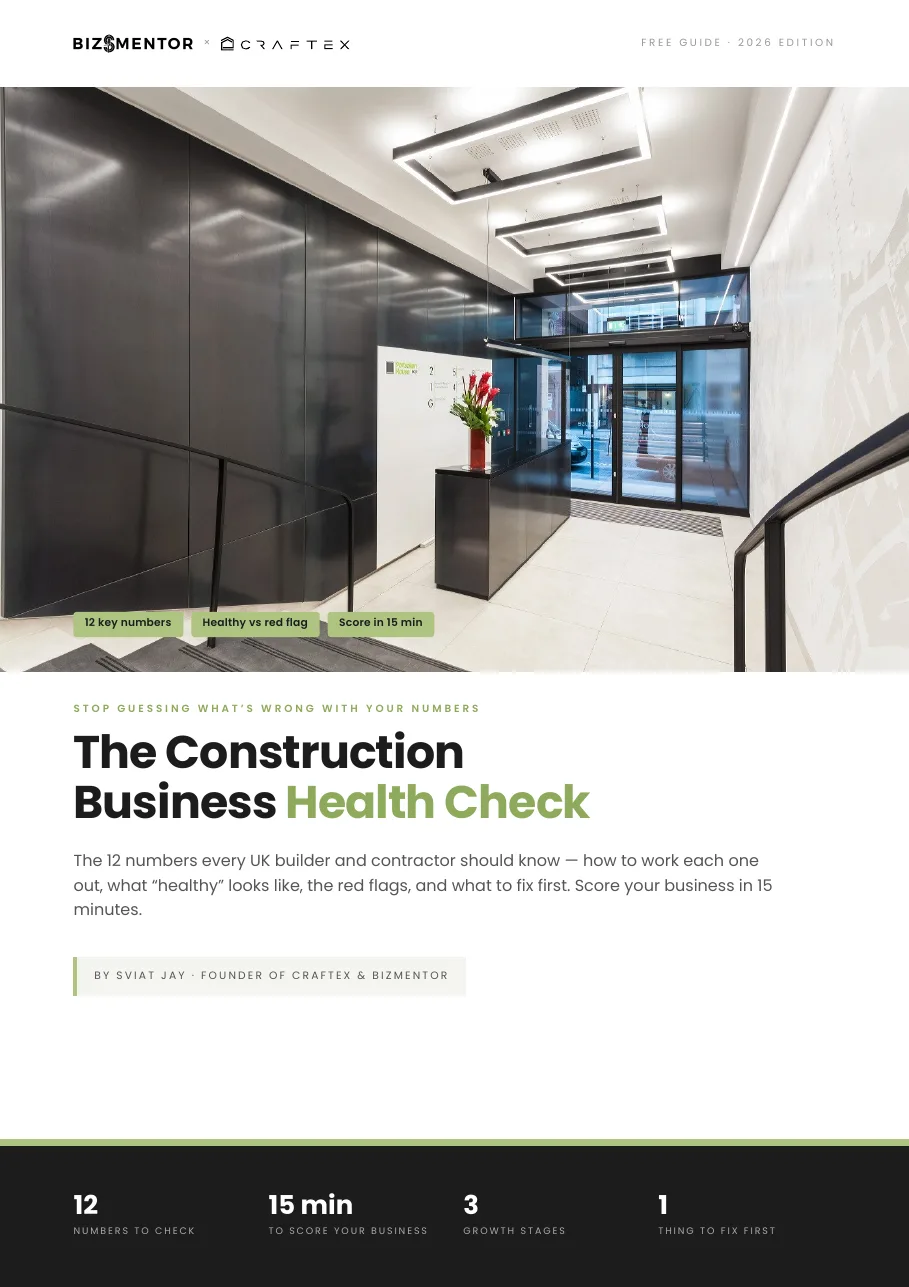
Which number is costing you most? Take the free 4-minute Construction Business Scorecard: 18 questions on your pipeline, sales, pricing, cash flow and systems, with your weakest area shown first. Need prices built for you? See our estimating service.
Plan the year around the exterior season
Exterior work depends on dry weather. A budget that assumes the same turnover every month will look wrong by November.
- Budget turnover by month, with exteriors in the drier months.
- Book interiors, commercial and new-build work for the wet months in advance.
- Keep a cash buffer for the slow weeks before they arrive.
- Track exterior days lost to weather, so next year's quotes include a realistic allowance.
A year planned like this is also how a decorating firm grows into a team: see how to grow a decorating business.
Want a 12-month decorating budget that covers your slow months?
Book a free call.
Charge for colour changes and extra coats
Typical decorating variations:
- extra rooms, doors or ceilings added once you're there
- a colour change after the first coat
- filling and repairs far beyond what the quote assumed
- other trades damaging finished work
Already on a job that's losing money? See underquoted a job: the next 48 hours.
Say it the same way every time:
"No problem, we can do that. It’s outside the original quote — I’ll send you a price today and we’ll start once you’ve approved it in writing."
Then invoice approved extras at the next stage payment, not at the end.

Check old paint before you price
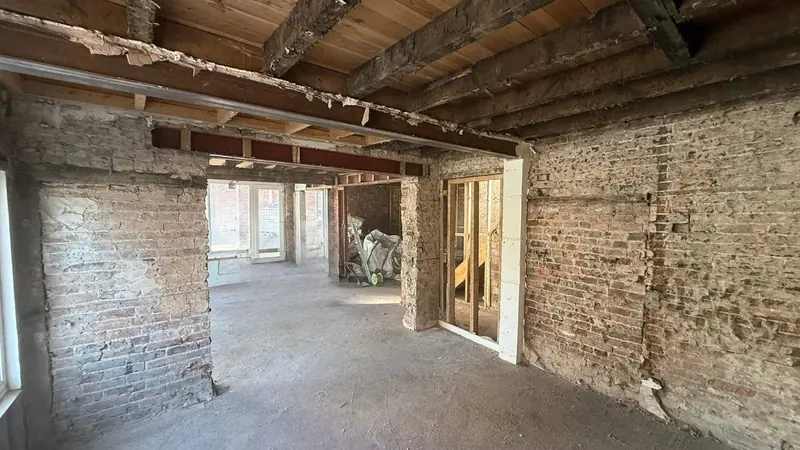
On older properties, the paint itself can change the job.
- The British Coatings Federation says lead was taken out of most paints in the 1960s. Wood and metal painted before then may contain significant lead.
- Dry sanding, blowlamps and burning off should not be used on it.
- Wet methods, chemical strippers, containment and clean-up all add hours and materials.
Test suspect surfaces at the survey and price the safer method. Finding it halfway through means unpaid hours or a difficult conversation.
Quoting a period front door and windows at your normal exterior rate, then discovering lead paint on day one.

Job-cost interiors and exteriors apart
New to tracking costs per job? Start with our simple job costing system. Pricing a room, a day or a commercial job? See how to price decorating jobs.
| Job | Type | Price | Quoted GP | Actual GP |
|---|---|---|---|---|
| Example A | Interior | £8,571 | 30% | 19% |
| Example B | Exterior | £2,400 | 35% | 38% |
The interior lost 11 points — usually prep hours or free extras. Track hours by stage (protection, preparation, coats, snagging) and you'll see which one.
Commercial and new-build: painting and decorating for a contractor falls under CIS. Expect 20% deducted from labour (30% if you're not registered) and the VAT reverse charge between VAT-registered firms. Price damage by following trades as a variation.
Ghennadi, decorator: £2K a month to £13.5K a month profit in 60 days
His business turned over £230K with almost no profit. He started pricing every job properly with a clear scope and moved from £34K to £50K projects. Individual results, not typical or guaranteed.
From Ghennadi Catansus's Trustpilot review: "When I first signed up with Sviat, my business was a mess and I was still on the tools. Now we've already hit £400k in revenue this year!" Individual results, not typical or guaranteed.

Get the free PDF guide
14 pages. Sent to your inbox in 2 minutes.
Busy but not seeing the profit?
Book a free strategy call and we'll find where your decorating jobs leak.
Before you send your next decorating quote
Tax and safety points are general information as of October 2026. Check the details with your accountant and current HSE guidance.
Before you go
- Preparation is a separate line with hours you have checked
- Colour changes and extra coats are listed as variations
- Surfaces on older buildings were checked for lead paint
- Exterior work has a weather allowance and fits the monthly budget
- Last three interiors and exteriors were job-costed by stage