How to Grow a Roofing Business in the UK

The short answer
Price every roof for a gang, not for your own day. Then build work that lasts all year, hire in the right order, train someone else to survey and price, and job-cost every roof.
- Price for a gang first. An employee on £18 an hour costs about £27.40 per chargeable hour, before rain days, scaffold and profit.
- Build year-round work. Repairs and maintenance fill winter; re-roofs and flat roofs fill summer.
- Stop being the only surveyor. If only you can spot rotten timber and price a roof, every quote waits for you.
- Grow the roofs that make money. Job-cost pitched and flat roofs separately, then grow the one that holds its margin.
Most roofers hit the same wall. The phone rings, the diary is full, and the business is still you, a van and a ladder. You survey every roof, price every roof and work on most of them. There is no more of you.
This guide shows how to grow a roofing business in the UK past that wall. It covers gang pricing, year-round work, your first hires, the surveying bottleneck and simple systems.
It is written by the owner of a working London construction company who mentors trade business owners one to one. If you want to talk through your own numbers, book a free strategy call.
The four stages of a roofing business
Every roofing business we see sits at one of four stages. Each one needs something different from the owner.
- One-man band You survey, quote, strip, cover and chase money. Growth stops at your hours.
- One gang Two or three of you on one roof, with you still on it every day.
- Two or three gangs You survey, price and sell. Each gang has a lead roofer who runs the roof.
- A company A contracts manager runs the gangs and someone runs the office. You run the business.
The five steps below move you from one stage to the next. Skip one and the business usually slides back.
Step 1: price every roof for a gang
Most one-man bands price for their own day. That price falls apart the moment you pay someone else to be on the roof.
Our roofing playbook works it out like this. An employee on £18 an hour costs about £27.40 per chargeable hour once you add National Insurance, pension, holiday and the hours you can't bill. Then add a margin floor: 20% for overheads and 10% for profit makes 30%.
So the lowest price for that hour is £27.40 ÷ 0.70 = £39.14. Below that, every hour your roofer works makes the business poorer. For pricing a single roof step by step, see how to price roofing jobs.
Roofing adds two costs other trades don't carry. One lost rain day for two roofers costs £438 in our worked example. Unpriced, it takes the job from a 30% margin to about 26%. Scaffold that stays up an extra week does the same. See roofing business profit margins for the full worked re-roof.
Not sure where your business is weakest? Take the free 4-minute Construction Business Scorecard. It scores your pipeline, pricing, cash flow and systems, and shows the weakest area first.
Step 2: build work that lasts all year
A gang needs a steady week in January as well as in June. Most roofing firms are flat out in summer and scraping in winter. Build a mix that covers both:
- Repairs and leaks: they peak when the weather turns. Each one puts you on a roof that will need replacing one day.
- Planned maintenance: gutters, flashings and checks for landlords and property managers, booked on a schedule.
- Re-roofs and flat roofs: bigger jobs for the drier months, often found on your repair visits.
- Insulation upgrades: installing roof and loft insulation in homes is zero-rated for VAT until 31 March 2027.
- Commercial packages: main contractors need roofing priced and run properly.
Our guide on how to get more roofing work covers the channels in detail. Commercial work pays bigger but later. Read how to get commercial roofing contracts before you price your first package.
Step 3: hire in the right order
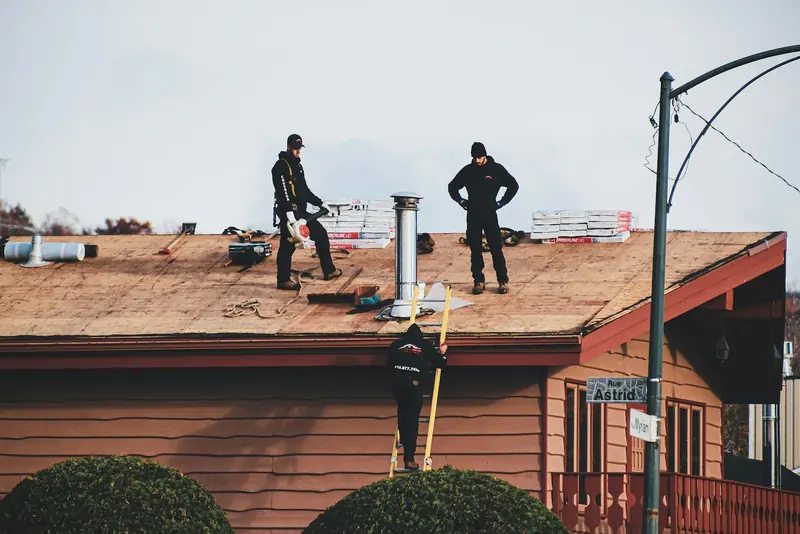
Your first hire is someone who can run a roof without you. That is usually an experienced roofer, not an office manager.
A sensible order for most roofing businesses:
- A roofer who can lead a job. This frees you to survey, quote and sell.
- A labourer or apprentice. They strip, load out and clear, so the roofer covers faster.
- Part-time admin. Quotes, scaffold bookings, invoices and chasing, so they stop eating your evenings.
- A second lead roofer. Now you can run two roofs at once.
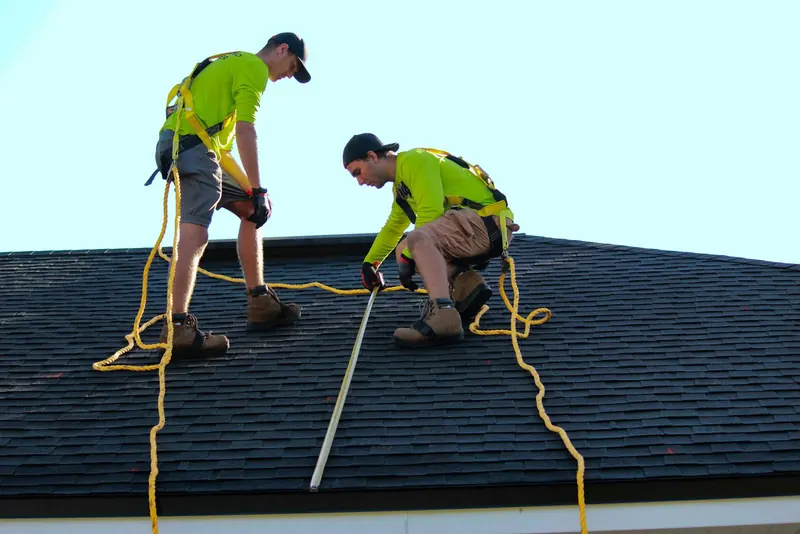
Each lead roofer also runs safety on the roof. The law says falls must be prevented wherever work at height can't be avoided. So pick people you trust to set up scaffold, edge protection and harnesses properly.
Before each hire, check your prices carry the new wage. Can't find anyone? Our guide on what to do when you can't find workers covers adverts, apprentices and keeping staff. For the legal steps, see hiring your first employee.
Ready to take on a roofer but not sure your prices can carry it?
Book a free strategy call and we'll check the numbers with you.
Step 4: stop being the only one who can survey
Here is the bottleneck most growth advice misses. In most roofing firms, only the owner can look at a roof and price it. So every enquiry waits for your visit, often in the evening after a day on the tools.
The fix is to teach a lead roofer to survey the way you do. Give them a survey sheet: roof type and area, access and scaffold, what's under the covering, photos from every side. Then you price from the sheet and the photos.
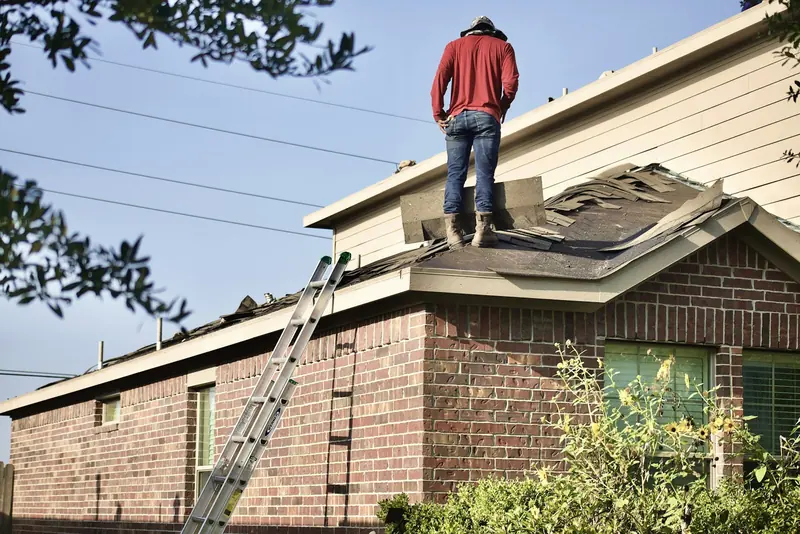
Hidden timber is the part people get wrong. Price rotten battens, rafters or decking as a provisional sum at an agreed rate per m². Get written approval once the covering is off. That way a junior surveyor can't sink the job.
Paperwork matters too. One council's guidance says re-roofing half the roof or more generally needs building control approval. Members of the NFRC's CompetentRoofer scheme can self-certify instead, so jobs close without waiting on an inspector.

UK Roofing Profitability Playbook
True hourly cost, weather allowances, scaffold time, provisional sums and job costing for roofing, with worked examples.
Get the free guideStep 5: build systems so roofs run without you
A gang copies what you do. If nothing is written down, every roof runs a different way and you end up checking all of them.
Start with four simple systems:
- A job pack: survey sheet, photos, materials list, scaffold dates and the client's contact details, ready before day one.
- A weather rule: who decides a rain day, how the client is told and how the programme moves.
- Variations in writing: photos of hidden timber and a signed approval before any extra work.
- Job costing: hours, materials, scaffold and skips against the quote on every roof.
Job costing is how you know what to grow. In the example in our playbook, a re-roof priced at 30% finished at 19%. A flat roof priced at 35% finished at 38%. Without the numbers, that owner would have pushed the wrong work.
Our construction business systems guide shows how to set these up without a big software bill.

How we help roofing owners grow
The order matters more than the speed. Dima, an electrician in our mentorship, put pricing and job costing in place first. Then he took on around 10 people in about four weeks. He was earning around £7–8K a month. Individual results, not typical or guaranteed.
The trade is different, but the order is the same for a roofer.
Sviat Jay runs Craftex, a London construction company, and mentors owners one to one himself. As he puts it in our roofing playbook: "Weather days are real. Plan for them in your hours and your programme — don't donate them to the client."
Every business has different strengths: one owner sells well, another runs jobs well. He finds yours and builds on them. He aims for results in about 4 months, not the 1–3 years many coaching programs take.
Small groups are there for owners who want to start with a lower commitment. If you want to get off the roof and start running the business, book a free strategy call, or see how our mentoring programs work.
Mistakes that keep roofers small
- Hiring before pricing: a new wage on old prices makes you busier and poorer.
- Donating rain days: a lost day is a cost. Put it in the price and the programme.
- Summer-only work: a gang you can't keep busy in winter is a gang you lose.
- One surveyor: if only you can price a roof, your evenings are the limit of the business.
- No job costing: without it you can't tell which roofs to grow and which to drop.
Before your next hire
- Your prices cover about £27.40 per employed hour plus a 30% floor
- Rain days and scaffold time are in every quote
- At least a third of your work comes in through winter
- A lead roofer can survey from your sheet
- Every roof is costed against its quote